Friday, October 28, 2022

Black History Month 2022 - Update to Charles Waterton & slavery blog

In the final of our blog series for this year's Black History Month, we're looking at how ongoing research has led to an update to our Charles Waterton and slavery blog from 2 years ago.

Following the discovery of the will of Thomas Waterton, Charles' father, in the John Goodchild Collection at West Yorkshire Archives, we now have more information about Waterton's involvement in the family's plantation and with the enslaved workforce in Guiana. 

The update is as follows:

Aged 22, Waterton was sent to administer the plantations and the enslaved workforce on behalf of his family. He did this job for seven years (1805 – 1812). He might have received a salary for this work, but it is likely he was sent out in order to avoid paying someone outside of the family.

Charles’ father died in 1805, shortly after his arrival in Guiana. The will of Thomas Waterton, Charles’ father, which is in the John Goodchild collection with West Yorkshire Archive Services, reveals that Charles inherited the family home in Walton but did not inherit the family estates and the ‘slaves thereon’ in Guiana. Waterton managed the plantations on behalf of younger family members until they came of age to manage them themselves.

Thomas Waterton's will from 1805. It is a large, handwritten document on parchment paper
The Will of Thomas Waterton
Image courtesy of West Yorkshire Archives


For the other blog posts in our Black History Month 2022 series, see:


Wednesday, October 26, 2022

Black History Month 2022 - Charlie Williams

As part of our series of blog posts exploring Black history in the Wakefield district, Hannah Taylor, Research Volunteer, has researched and written a blog post about Charlie Williams.

Charlie Williams was one of Britain's most loved and well-known comedians in the latter half of the twentieth century. He is known for his strong Yorkshire accent and has working roots in the Wakefield district. He became the first Black British comedian to reach a mainstream audience.

Williams was born in 1927 in Barnsley. His father was from Barbados and had come to Britain to fight for King and Country in World War I; his mother was a South Yorkshire lass. After finishing school at 14, Charlie worked as a miner in Upton Colliery during World War II and the immediate post-war period. During this time, he played football for the colliery team, building on the skills that would later pave the way for his professional football career.

Upton Colliery was a coal mine based near the village of Upton, in the south-west of the Wakefield district. It had a short working lifespan of only 40 years, due to geological issues and a significant explosion, which caused the mine to ultimately close down.
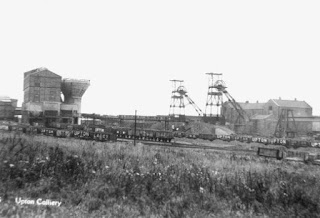
A black and white photo of Upton Colliery, showing long coal trucks, 2 tall mine shafts and some associated buildings
Upton Colliery, early 20th century

Despite its short tenure, the mine’s football team, Upton Colliery FC, produced notable later-to-be professional footballers, including Joe Shaw, George Ashall and, of course, Charlie Williams. 


Williams left the colliery team in 1948 after being scouted by Doncaster Rovers during an Upton match. He made his mark on history in the football world by becoming one of the first post-war Black British players. 

An action shot of Charlie Williams playing football in the 1940s. He is wearing a long-sleeved football shirt with the sleeves rolled up, white shorts, socks and football boots. He looks as if he has just kicked the ball hard. He has short afro hair.
Charlie Williams playing football in the 1940s.
Image courtesy of Barnsley Museums and Archives

His professional footballing career started at Doncaster Rovers, where he had significant and notable success. Local newspapers, such as The Star Green' Un and the Yorkshire Post, repeatedly credit Williams as the 'Man of the Match' and account for his brilliant skill.

However, it was not uncommon for Williams' race to be mentioned in these articles. This highlights the challenges that Black British people faced to be accepted as equals in society. Sadly, Williams certainly experienced racism and discrimination during his footballing career. He was not mentioned in the 1956 Encyclopaedia of Association Football despite having established himself as a regular first team player that season. 

Williams was also frequently subjected to racist abuse whilst playing, particularly from opposition players and fans. His former teammates remember that he responded to this with dignity and by "upping his game" on the pitch but reflect that it must have been painful for him.

Williams’ successful football career featured 171 appearances with Doncaster Rovers between 1948 and 1959. Following his retirement in the early 1960s, Williams went on to sing at northern working men's clubs. 


During these gigs, he found that his comedic chat between songs was more popular, so he pursued a career in comedy instead. A key reason for Williams' popularity among the audience was his strong Yorkshire accent. It allowed the predominately white audience to relate to him – a working-class, Yorkshire-born-and-bred man.

Charlie Williams in the 1960s. He is wearing a shirt, tie and leather jacket. He is smiling, and has short afro hair.
Charlie Williams in the 1960s.
Image courtesy of Barnsley Museums & Archives

His Yorkshire accent later became a hit on TV shows with Granada and the BBC, with notable catchphrases such as 'Hello, me old flower', 'Na then, Blossom' and 'Na then, 'old on'. 


The 1970s-1990s was Charlie Williams' era: he received an MBE for his charity work in Yorkshire and was featured repeatedly on the hit TV show 'The Comedians'. He was even given the title 'the Uncrowned King of Batley', a reference to the famous Batley Variety Club! 1972 was a pivotal year for Williams as he had his own television show and a six-month season at the London Palladium.
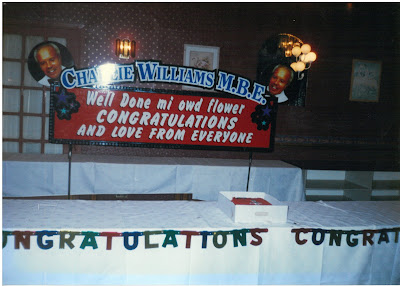
Decorated table and hall for Charlie Williams' MBE party. There is a banner on the wall reading 'Charlie Williams M.B.E. Well Done mi owd flower. Congratulations and Love from Everyone!'. The banner is flanked by two photos of Charlie
Photo from a party thrown to celebrate Charlie Williams' MBE
Image courtesy of Barnsley Museums & Archives


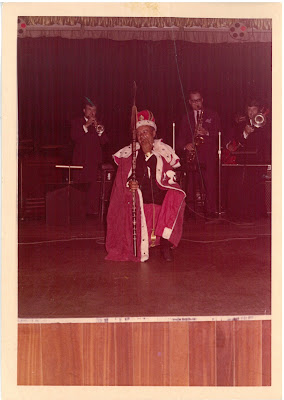
Charlie dressed in a royal robe and crown, and is holding a spear decorated with insignia of a tribe, as opposed to a sceptre similar to the Crown Jewels. He is seated, and looks quite bashful! There are people playing trumpets behind him
Charlie Williams on stage, dressed in royal regalia with a spear, at the party to celebrate his MBE
Image courtesy of Barnsley Museums & Archives


Some Black British comedians, such as Lenny Henry, argue that Charlie Williams' popularity at least partly derived from the racist society at the time. In the 1970s, the BBC still produced television shows where ‘blackface’ was a key feature of comedy, adding to racial hostilities in Britain.  In Henry’s view, Williams often told jokes at the expense of Black people to get laughs from the white audience. 


Due to changing attitudes and societal progression about what should be accepted in the entertainment industry, Williams' career as a comic subsided. Nevertheless, upon reflection on his fame and comedy success, Williams articulated, “I don't have any regrets…I told jokes that I thought would suit the audience”.

Charlie Williams died in September 2006, having lived with Parkinson's disease and dementia. Williams had an extraordinary life: one of the first Black post-war professional footballers and the first famous Black British television comedian.
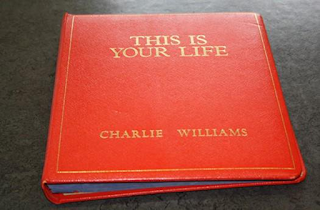
A red leather-bound book with 'This Is Your Life - Charlie Williams' embossed in gold
The "This is Your Life" book Charlie Williams received after going on the television programme

He is fondly remembered by his former neighbours:

“He was a terrific singer…He’d always got a smile… He were a grand fella…People used to come for his autograph and he never turned them away…He talked in broad Yorkshire.”

[Extracts from an oral history interview with Harry Godber, Upton, May 2017]

His Yorkshire identity was essential for his popularity, and thus he is seen by many as a local hero. But his legacy is complicated. Williams' comedy about his race was 'of its time' and would likely be felt inappropriate or offensive today. 

However, some argue that Williams bridged a gap between Black and white communities through the skill of comedy and entertainment. 

He endured racism and prejudice during his career but paved the way for Black Britons to make appearances on national TV.  


With thanks to the Wakefield Council BAME Forum for their comments and feedback, and Barnsley Museums and Archives for their help and providing permission to use their photos. 

For other blog posts in our Black History Month 2022 series, see:

Friday, October 21, 2022

Black History Month 2022 - Anti-slavery campaigning

In the second of our series of four blog posts highlighting Black History in the Wakefield district, we're looking at these anti-slavery campaigning leaflets found in our collections.

In the mid-1800s Wakefield was very active in anti-slavery campaigning, promoting human rights and organising meetings and lectures in various venues across the district.

Please note: an historical term used to describe Black people is used in the second leaflet. This is not language that to be used or condoned today. 

Frederick Douglass, 1847


Leaflet advertising an anti-slavery meeting, which reads: What ho! our countrymen in chains! The whip on woman's shrinking flesh! Our soil still reddening with the stains, Caught from her scourging, warm and fresh! What! mothers from their children riven? What! God's own image bought and sold! American's to market driven, And barter'd, as the brute, for gold! (Whittier). Frederick Douglass, recently a slave in the United States, now one of the most talented Orators in the Cause of Emancipation, will, in connection with other Members of the Anti-Slavery League, address a Public Meeting, to be held in the Corn Exchange, Wakefield, on the Evening of Friday next, the 15th instant. Chair to be taken at half-past Seven o'Clock. Reserved seats, sixpence. Admission, to the body of the hall, free. Wakefield, January 9th 1947. Printed by Nichols & Sons, Printers, Northgate, Wakefield.
A leaflet advertising a talk by Frederick Douglass at the Corn Exchange in Wakefield on 15th January 1947 (full transcription available in image alt text)

Frederick Douglass (1818? - 1895) was an anti-slavery campaigner and social reformer. He had escaped slavery himself and dedicated his life to campaigning against the practice and sharing his experiences. Douglass became the first Black U.S. Marshal and is famous for his first autobiography, Narrative of the Life of Frederick Douglass, an American Slave, Written by Himself.

You can read his full speech given at this lecture here.

William Howard Day, 1860

Leaflet for an anti-slavery talk. Reads: Slavery. The Committee of the Wakefield Anti-Slavery Society have pleasure in announcing that W. Howard Day, Esq., M.A., A Coloured Gentleman, of Canada West, will deliver a Lecture in the Music Saloon, on Friday Evening, Dec. 7th, 1860, Subject: "Slavery in the United States, and the Social & Moral Improvement of the 40,000 Fugitive Slaves in Canada." The Chair will be taken at half-past Seven o'clock, by The Worshipful The Mayor. Admission Free. Posted by William Grace, Junr. Hon. Sec. Printed by Stanfield & Son, Printers and Lithographers, Wakefield.
Leaflet advertising a lecture by W. Howard Day in the Music Saloon, Dec 7th 1860 (full transcription available in image alt text)

This leaflet advertises a lecture given by William Howard Day in the Music Saloon on Wood Street in Wakefield in December 1860. Day (1825-1900) was born in New York City, and was the only Black graduate from Oberlin College in 1847 where he received his M.A. in 1859. He was an abolitionist, editor, publisher, printer, teacher, lecturer, civic leader and clergyman. 

Wednesday, October 19, 2022

Black History Month 2022 - St George's Hospital 1966

October is Black History Month, and over a series of four blog posts we will be highlighting new discoveries in our collections, local heroes and the findings of ongoing research relating to Black History in the Wakefield district.

Today, we're starting with this fantastic photo of staff at St George's Hospital, Rothwell, on prize-giving day in April 1966.

Photo of a large gathering of staff for prize-giving day at St George's Hospital, Rothwell. Many are dressed in nurse's uniforms, some appear to be doctors, and others are in smart plain-clothes. There are several nurses who are Women of Colour and a male doctor who is potentially also a Person of Colour


This photograph shows how diversity was of increasing importance to the hospital and its workforce in the 1960s, with several People of Colour being chosen to receive awards for their work.

In 1948, the National Health Service (NHS) was established. It brought access to hospitals, doctors, nurses and dentists together under one service which was free at the point of delivery for the first time. It was very ambitious, and Britain, bombed-out and bruised by the Second World War, needed a huge injection of skilled workers to rebuild and make the NHS work. 

Citizens from across the Commonwealth answered the call for help. The first boat of workers arrived in Britain from Jamaica on the passenger ship Empire Windrush in 1948.

Many of the staff members at St George's Hospital lived in the Wakefield District, however we do not have names or information for most of the people in this photo! Can you help - do you recognise anyone? Did your relatives, friends or neighbours work at the hospital in the 1960s?

Comment below or drop us an email at museums@wakefield.gov.uk - we'd love to hear from you!

Monday, October 17, 2022

Spooky Stories Trail 👻

It's Spooky Season and we've been creeping around our sites looking for terrifying and terrific hidden treasures and tales 👀

We challenge you to tick them all off - if you dare! 

There's a bonus here from our Museum Store too... 


Castleford Museum – Witch Balls 🧙‍♀️


A large glass witch ball decorated with images of rattlesnakes, pigeons and other animals

Made at Castleford’s glass factories, these most magical witch balls were historically hung in windows to ward off evil spirits, spells and witches. 


Are they doing a good job? Find them in the Museum and judge for yourself… 
 
A large glass witch ball with a series of weird and wonderful animals on it, including a large Death's-Head Hawkmoth


Hint: they're hiding with the rest of our gorgeous local glasswork!


Wakefield Museum - Boa Constrictor 🐍

A large taxidermied boa constrictor snake in a glass case, coiled up


Picked by our Visitor Experience Assistants Jade and Kathryn, Waterton’s taxidermied boa constrictor snake watches you as you walk around around the room with his thin, slippery smile… 

Where has he slithered off to? 

Hint: he’s behind you...!


Pontefract Museum - The Green Man 🧝

A stone face carving of the Green Man
This stony face belongs to a representation of the Green Man. Although more of a pagan figure, this stone comes from St John’s Priory, near Pontefract Castle.

The stone is probably from a lectern, which would have been at the end of the dining hall where scriptures would have been read to the silent Cluniac monks.

Can you find him?

Hint: you’ll have to look low down!


Pontefract Castle - Richard II 👑

The remains of the bakery and kitchens area at Pontefract Castle
King Richard II was imprisoned at Pontefract Castle by his cousin, who became Henry IV. 


Although in Shakespeare’s
Richard III it says he was ‘hack’d to death’ in Pomfret’s ‘bloody prison’, he actually starved to death. Was it in protest or was he not fed? 

He was kept in the quarters above the Bakery at the Castle – can you find them? 


Sandal Castle - The Battle of Wakefield ⚔️

An artist's impression of the Battle of Wakefield

Did you know that the poem ‘Richard Of York Gave Battle In Vain’ to remember the colours of the rainbow is inspired by the Battle of Wakefield? 🌈

It happened on 30th December 1460 on Wakefield Green below Sandal Castle. Richard of York (the 3rd Duke of York) was Edward IV and Richard III’s dad, and he was killed in the Battle of Wakefield. 

Can you imagine hiding out in the Castle during a battle?


Bonus: Spooky Stories from the Store - Dame Mary Bolles' Bedroom Door 👻

A very old wooden door from Dame Mary Bolles' bedroom

Dame Mary Bolles lived at Heath Old Hall in Wakefield in the 1660s. 

She asked for the door to the bedroom she died in to be sealed up and for nobody to ever enter. 

50 years later someone broke the seal! 

It’s claimed that this released her spirit, making the door ‘haunted’…

Monday, October 3, 2022

#CleverClogs - New Display at Wakefield Museum

Sarah Verreault, a student at the University of Leicester’s School of Museum Studies, has completed an audit of the museum’s shoe collection over the past eight weeks. She has chosen the story of British clogs, locally worn and produced, to highlight in a new display at Wakefield Museum

Learn more about these #cleverclogs in her blog below!

Sarah Verreault with her Clogs display at Wakefield Museum


What are British clogs?


A British clog has a leather upper, a wood sole, and irons nailed into the heel and sole.

They first appear in written accounts in the 1600s in Lancashire, Cheshire and Cumbria, then spread to the rest of the north of England. They reached peak popularity in the second half of the 19th century. They declined in the first half of the 20th century as other types of shoes became more affordable and fashions changed. Clogs then became a symbol of poverty and charity. Some industries, such as heavy engineering and farming, continued to use clogs. Today, they remain popular for certain kinds of dances such as Morris dancing and clog dancing. Other styles of wooden soled shoes still come in and out of fashion.

Clog making is now on the Heritage Craft Association’s Red List of Endangered Crafts with only five registered full-time makers.

A child's pair of red-brown leather clogs with a nailed wooden sole. They have an ankle bar with a small brownb button, and a small decorative steel buckle. There is brass on the toe tip. They have horseshoe irons on the sole and heel.
A child's pair of leather clogs, with horseshoe irons on the sole and heel, dating between the 1920-1950s


How are clogs made?


The leather uppers were made in the same way and styles as other types of shoes. New and old shoes could be clogged to make them more hard-wearing. A pair of uppers could be re-ironed and reclogged many times, so the leather was well cared for.

The clog-block maker would harvest the wood, preferably alder, and cut it into blocks to sell to the clogger. The clogger carved the blocks into a sole. Like other shoes, until the middle of the 19th century, they were made on straight lasts, meaning that the left and right were the same shape. If the clogger was skilled enough, the sole could be fit to the foot of the customer.

Earlier clogs were bound around the edges with hoop-iron. The familiar grooved horseshoe irons became more common in the early 19th century. The local blacksmith or the clogger would fit the irons. Extra protection like iron plates and leather pads could also be added.

A pair of child's clogs made from black-brown leather, with a square wooden toe
A pair of child's clogs, with leather upper and a square upturned toe, dating likely from 1850-1900

Where were they worn?

Clogs were particularly present in the north of England and the south of Scotland but do also feature elsewhere. They are well suited to the landscape and weather in this region. Clogs require a special rocking or rolling movement to walk because they are much heavier and stiffer than shoes.

They were worn by women and men, adults and children, in the country and cities. They were worn at work and in everyday life including to church. Crimp clogs, called ‘dandy’, ‘Sunday’ or ‘neat’ clogs, would have elaborate designs cut into the upper. Children used to play at making sparks fly by hitting their irons on stone. The wood sole wore through stockings quickly so many people wore clogs bare foot. With or without stockings, they were often lined with straw, hay or bracken.

They were worn in mines, quarries, pits and kilns, in building trades, docks and wharfs, agriculture, transport, brewing, mills and factories. Different styles of uppers were associated with different occupations such as the miner’s blutcher clog whose upper only has two pieces or brewer’s clogs with watertight tongues and very square toes. How long a pair would last depend on who wore them and where. Pit clogs would last a little over a year, but in a mill, they could last 20 years with care.


Local Connections: Wm. Lamb Clog Manufacturer

Based in Bottomboat, Stanley, West Yorkshire, the company began in 1887 when William Lamb began producing clogs for miners. It then expanded to supplying shoes for women working in cotton mills. They became one of the biggest British clog manufacturers.
Seven male workers stood outside the Wm Lamb Clog Manufactuers Shop. There is a horse and cart with an array of clogs on display, and one of the men is stood on the cart holding a pair for sale. The other workers hold an array of tools and clogs, and one has his hand petting a dog.
Workers stood outside Wm. Lamb Clog Manufacturers' shop, c.1900-1920

In the 1920s, the company started making work boots, and army boots during the First and Second World Wars. Later in the century, they manufactured football boots and trainers. Today, they have stopped manufacturing and are focused on importing footwear.

Black and white photo of the outside of Wm. Lamb Clog Manfuacturer, a rectangular brick building, two floors high, with large windows. There is a clogger stood at the first floor opening, a mustachioed man in a car loaded presumably with clogs, and three other workers in flat caps stood outside posing for the camera
Wm. Lamb Clog Manufacturer in Bottomboat, c.1910-1925


The Clogs - Dress to Impress exhibition is now on display at Wakefield Museum in the main gallery. For opening times and access information, click here

Looking for a soundtrack for your clog-tastic reading? We've put together a Spotify playlist inspired by Sarah's shoe audit here!

To learn about another important industries in the Wakefield area, Ossett's shoddy and mungo trade, click here.