Friday, November 11, 2022

Remembrance Day: George Kellett and Arthur Cox

 On November 11, 1918, Wakefield-born soldier George Kellett wrote in his diary:

"We heard that an Armistice had been signed but we keep hearing explosions and cannot tell whether it is gunfire or not"

George’s diary is a valuable insight into an ordinary soldier’s experience of the First World War. 

We’ve put together an interactive learning resource based on his diary entries.

Sepia photograph of George Kellett in his army uniform. He is a young white man in his early 20s. He has short hair, is clean-shaven, and smiling at the camera.
George Kellett in uniform during the First World War.
He would have been in his early 20s during the War.

George survived the war and was demobilised (taken out of active service) on January 21st 1919.

He went home to marry his childhood sweetheart Emma.

Handwritten note from George to Emma, which reads: 21st January 1919 - Demobilised today. Don't write until you hear from me. Best love, George xxx
A postcard from George to Emma, which reads: 21st January 1919 - Demobilised today. Don't write until you hear from me. Best love, George xxx

Unfortunately, many soldiers were not as lucky as George.

We’re also remembering Sergeant Arthur Cox, from Thornes Lane, Wakefield.

A Sergeant with the Royal Field Artillery, Arthur earned the Military Medal for bravery in the field.

A hand-tinted photograph of Sergeant Arthur Cox during the First World War. He is seated, holding a cane, with his hat on a table beside him. There is a handwritten sign to the left of the photo that says ‘Somewhere in France’
A hand-tinted photograph of Sergeant Arthur Cox

Unlike George, Arthur was an experienced soldier, having previously risen to the rank of Corporal with a volunteer regiment, the Queen’s Own Yorkshire Dragoons. 

He had fought in South Africa during the Second Boer War and been honoured with the Freedom of Wakefield.

Arthur sadly died just a few weeks after the government announced his Military Medal award in the London Gazette. 

Arthur Cox's 7 service medals and memorial plaque
Arthur Cox's medals, with the Military Medal (top left), other service medals, and his memorial plaque in the centre.

Arthur was killed in action on 29th July 1917 ahead of the 3rd Battle of Ypres, better known as Passchendaele. 
He is buried at the Godeswaersvelde British War Cemetery in France, near the Belgian border. 

After the Armistice, Arthur’s widow received a photograph of his grave, his posthumous service medals, and a memorial plaque. Sometimes called the ‘Widow’s Penny, these plaques were sent to the next of kin of all fallen soldiers. Arthur’s family proudly displayed the plaque surrounded by his medals from both wars. 

A photograph of Sergeant Cox’s grave sent to his widow after the Armistice. It is a simple wooden cross planted into the field where he was buried
The photograph of Arthur's grave at Goedeswaersvelde British War Cemetary, sent to his widow after the Armistice

Sargeant Arthur Cox's headstone, with a poppy growing beside it.
Sargeant Cox's grave in more recent years, now with a headstone.
Photo shared with thanks to Clare Ledger-Potter, Cox's great-granddaughter.

Today, we are remembering Arthur, George, and all of those who have served in the armed forces.

Click here to read George's 1918 diary entries and find out more about his experiences.

Thursday, November 10, 2022

Counting Down to Christmas!

We're getting into the festive spirit, so here's all the details of what's going on across our sites this Christmas! 🎄


Lanterns and Lights (22nd November)

Castleford Museum

How did the people of Castleford make dark nights bright in the past?
Discover for yourself at Castleford Museum as we stay open later for an evening of family activities all about lanterns and lights.

Get hands on with light themed objects from our collections, experiment with different materials to create your own light art and make a colourful lantern to take home.

Tuesday 22nd November - 3:30pm to 6:30pm

FREE - no booking required


Liquorice Santa (10th December)

Pontefract Museum

Meet our special sweet Santa in his liquorice grotto and receive a Christmas gift!

Children of all ages and their grown-ups are invited to join us at Pontefract Museum for our very special Liquorice Santa drop-in day.

There will be lots of festive fun with hands-on crafts inspired by Pontefract's historic confectionary industry.

Santa and activities will be at the Museum 10.30am – 3pm.

FREE - No booking required, although plan ahead as it will be busy!


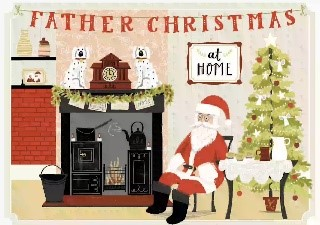
A cartoon of Father Christmas in his cosy home at Wakefield Museum

A Green Christmas (17th December)

Wakefield Museum

Visit Father Christmas in his cosy home at Wakefield Museum and find out what he's doing to make this Christmas green and eco-friendly!

Make your own fabulous Christmas collage, experience the season through your senses and have fun creating all sorts of crimble crafts to take home with you. We have everything you need to get you into the festive spirit!

This session is designed for SEND families (although all children and young people are welcome) and there will be changes to the sensory experience in the Museum for a more relaxed visit. 

All activities (including visiting Father Christmas) are FREE, but booking is essential as numbers are required. 

Book here 


An assortment of objects used in a Tudor Christmas

Let's Make Tudor Christmas Crafts! (20th December)

Pontefract Castle


Ever wondered how people in Henry VIII's time celebrated Christmas?
Children of all ages and their grown-ups are invited to join us as we explore some of the ways in which the Tudor residents of Pontefract Castle got into the Christmas spirit.
You can even make some Tudor-style Christmas decorations to take home!

Tuesday 20th December

Booking required - Children £2.50, accompanying adults free


A young visitor dressed as a Roman soldier at Castleford Museum with a Christmassy border

A Very Merry Mix Up (19th, 20th, 22nd and 23rd* December)

Castleford Museum


Join us this festive season as we travel through time!
Learn about the history of Castleford through the eyes of Roman Soldier Bobius, as he searches for a perfect present.
Follow along with his quest as he explores beautiful and unusual objects made throughout Castleford’s history and be inspired to make your own festive gift.

*Friday 23rd December: SEND families are welcome at all of our sessions but we are running this SEND session for those families who require a more relaxed atmosphere.
The session will be run with more sensory activities, more focus on independent learning, a lower light level and with a sensory tent and ear defenders available upon request.
10am to 3pm each day
Free - No Booking Required

Tuesday, November 8, 2022

Volunteer Opportunity: Exhibition Engagement & Evaluation Volunteer

From 14th November 2022, we will open an exciting new exhibition at Pontefract Museum – Women in Rugby League: Life with the Lionesses! This motivational touring exhibition showcases the women pioneers of international rugby league. For more information on the exhibition, click here.

We are looking for Exhibition Engagement & Evaluation Volunteers to support the project. 

You will welcome visitors to the exhibition space, provide information about the objects on display, help our Visitor Experience Assistants to monitor the security of the loaned objects, and gather visitor feedback about the exhibition. 

You will help us to ensure that every visitor to the exhibition feels welcome, learns something new, and has an enjoyable visit.

a volunteer engaging with a young visitor at Pontefract Museum

This opportunity is based at Pontefract Museum, 5 Salter Row, Pontefract, WF8 1BA.

What will I be doing?

Based in the exhibition gallery, you will:

-       Welcome visitors to the exhibition space.

-       Provide a brief introduction to the exhibition content and answer any questions visitors might have.

-       Encourage visitors to engage with the interpretation, including short films and dressing up/selfie opportunities.

-       Be present in the exhibition space to keep a close eye on the objects on display.

-       Observe how visitors interact with the exhibition and feedback to the Curatorial & Exhibitions team.

-       Invite visitors to answer a short evaluation survey.

What skills, experience and qualities do I need?

-       Interest in museums, collections, history or sport.

-       Good verbal communication skills.

-       A friendly, approachable manner and the confidence to speak to members of the public.

-       Ability to work independently.

How much time will I be expected to give?

-       At least one morning or afternoon per week – a regular slot would be preferable.
The museum’s opening hours are 10am - 4:30pm, Monday to Friday, and 10:30am – 4:30pm, Saturday. The museum is closed on a Sunday.

The exhibition runs from 14th November 2022 until 26 August 2023.  

What can I expect from Wakefield Museums & Castles?

-       A unique chance to work on an inspirational touring exhibition, the first major celebration of women’s international rugby league.

-       A welcoming and friendly team of staff and volunteers to work with.

-       Induction, full training, and ongoing support.

-       A named member of staff to provide support and answer questions.

-       Opportunity to develop skills, knowledge and confidence.

The induction programme for this role will include:

-       An overview of Wakefield Museums & Castles, our sites and collections- who we are and what we do.

-       Our volunteer policy and the volunteer agreement (signed by volunteers and their supervisor), including Assignment of Copyright and our Transparency Notice about how we process and protect your personal data.

-       Relevant policies and procedures, including Health and Safety.

-       Training and information on the exhibition content, the evaluation survey, and how to respond to queries from the public.


How do I apply?

Please email MusCasVolunteering@wakefield.gov.uk with any queries or to request an Expression of Interest form.

For a range of other exciting and varied volunteering opportunities with Wakefield Museums & Castles, click here

Monday, November 7, 2022

Women in Rugby League: Life with the Lionesses

Pontefract Museum
14 November 2022 – 30 September 2023


We're excited to be hosting Life with the Lionesses: The Exhibition. Partnership with Women in Rugby League

This motivational touring exhibition showcases the women pioneers of international Rugby League: the Lionesses. Hear from the women themselves and follow their ground-breaking journey on and off the field - from fundraising for their own tour, to playing on an equal stage with their male counterparts in the 2021 World Cup.

Visitors to the exhibition will discover a previously hidden history with a timeline spanning 100 years of women’s sporting achievements.

The exhibition opens at Pontefract Museum on 14th November, ahead of the World Cup final, which takes place in England on Saturday 19th November.  


Photo of the England women's rugby league team, the Lionesses, in action in 2002
The Lionesses in action in 2002

Many of the trail-blazing women featured in the exhibition come from or have played in the Wakefield district, including the inspirational coach, Jackie Sheldon. Her team tracksuit, jersey, and blazer will be on display in the exhibition alongside other previously unseen objects from the women’s rugby league archive, kindly lent by Heritage Quay, University of Huddersfield.


Photo of Jackie Shelton in front of exhibition information about her career and legacy
Jackie Shelton at the touring exhibition


Visit Pontefract Museum to discover this hidden history and celebrate how far the Lionesses have come.

For visitor and access information, click here

Opening times:

Monday
​10am – 4.30pm
Tuesday
​10am – 4:30pm
Wednesday
​10am – 4:30pm
Thursday
​10am – 4:30pm
Friday
​10am – 4:30pm
Saturday
​10:30am – 4:30pm
Sunday
​Closed

FREE entry


For more information about the exhibition, visit https://experiencewakefield.co.uk/event/women-in-rugby-league-life-with-the-lionesses-exhibition/

Find out more about the Women in Rugby League project at https://www.womeninrugbyleague.org.uk/

Interested in volunteering at this exhibition to help make it a success? Find out more here

Friday, November 4, 2022

New Interactive World War 1 Resource: George Kellett's Diary

What lessons can we learn from World War 1? 

How do you teach World War 1 to a child?

How do you teach about Remembrance Day?

We’ve put together an interactive resource based on the diary of Wakefield-born soldier, George Kellett, ready-made for use in lessons or for homework.

For KS2 upwards and packed full of photos, videos, objects and an interactive map, view it here!

Sepia photograph of George Kellett in his army uniform. He is a young white man in his early 20s. He has short hair, is clean-shaven, and smiling at the camera.
A photo of George Kellett in his soldier's uniform


Friday, October 28, 2022

Black History Month 2022 - Update to Charles Waterton & slavery blog

In the final of our blog series for this year's Black History Month, we're looking at how ongoing research has led to an update to our Charles Waterton and slavery blog from 2 years ago.

Following the discovery of the will of Thomas Waterton, Charles' father, in the John Goodchild Collection at West Yorkshire Archives, we now have more information about Waterton's involvement in the family's plantation and with the enslaved workforce in Guiana. 

The update is as follows:

Aged 22, Waterton was sent to administer the plantations and the enslaved workforce on behalf of his family. He did this job for seven years (1805 – 1812). He might have received a salary for this work, but it is likely he was sent out in order to avoid paying someone outside of the family.

Charles’ father died in 1805, shortly after his arrival in Guiana. The will of Thomas Waterton, Charles’ father, which is in the John Goodchild collection with West Yorkshire Archive Services, reveals that Charles inherited the family home in Walton but did not inherit the family estates and the ‘slaves thereon’ in Guiana. Waterton managed the plantations on behalf of younger family members until they came of age to manage them themselves.

Thomas Waterton's will from 1805. It is a large, handwritten document on parchment paper
The Will of Thomas Waterton
Image courtesy of West Yorkshire Archives


For the other blog posts in our Black History Month 2022 series, see:


Wednesday, October 26, 2022

Black History Month 2022 - Charlie Williams

As part of our series of blog posts exploring Black history in the Wakefield district, Hannah Taylor, Research Volunteer, has researched and written a blog post about Charlie Williams.

Charlie Williams was one of Britain's most loved and well-known comedians in the latter half of the twentieth century. He is known for his strong Yorkshire accent and has working roots in the Wakefield district. He became the first Black British comedian to reach a mainstream audience.

Williams was born in 1927 in Barnsley. His father was from Barbados and had come to Britain to fight for King and Country in World War I; his mother was a South Yorkshire lass. After finishing school at 14, Charlie worked as a miner in Upton Colliery during World War II and the immediate post-war period. During this time, he played football for the colliery team, building on the skills that would later pave the way for his professional football career.

Upton Colliery was a coal mine based near the village of Upton, in the south-west of the Wakefield district. It had a short working lifespan of only 40 years, due to geological issues and a significant explosion, which caused the mine to ultimately close down.

A black and white photo of Upton Colliery, showing long coal trucks, 2 tall mine shafts and some associated buildings
Upton Colliery, early 20th century

Despite its short tenure, the mine’s football team, Upton Colliery FC, produced notable later-to-be professional footballers, including Joe Shaw, George Ashall and, of course, Charlie Williams. 


Williams left the colliery team in 1948 after being scouted by Doncaster Rovers during an Upton match. He made his mark on history in the football world by becoming one of the first post-war Black British players. 

An action shot of Charlie Williams playing football in the 1940s. He is wearing a long-sleeved football shirt with the sleeves rolled up, white shorts, socks and football boots. He looks as if he has just kicked the ball hard. He has short afro hair.
Charlie Williams playing football in the 1940s.
Image courtesy of Barnsley Museums and Archives

His professional footballing career started at Doncaster Rovers, where he had significant and notable success. Local newspapers, such as The Star Green' Un and the Yorkshire Post, repeatedly credit Williams as the 'Man of the Match' and account for his brilliant skill.

However, it was not uncommon for Williams' race to be mentioned in these articles. This highlights the challenges that Black British people faced to be accepted as equals in society. Sadly, Williams certainly experienced racism and discrimination during his footballing career. He was not mentioned in the 1956 Encyclopaedia of Association Football despite having established himself as a regular first team player that season. 

Williams was also frequently subjected to racist abuse whilst playing, particularly from opposition players and fans. His former teammates remember that he responded to this with dignity and by "upping his game" on the pitch but reflect that it must have been painful for him.

Williams’ successful football career featured 171 appearances with Doncaster Rovers between 1948 and 1959. Following his retirement in the early 1960s, Williams went on to sing at northern working men's clubs. 


During these gigs, he found that his comedic chat between songs was more popular, so he pursued a career in comedy instead. A key reason for Williams' popularity among the audience was his strong Yorkshire accent. It allowed the predominately white audience to relate to him – a working-class, Yorkshire-born-and-bred man.

Charlie Williams in the 1960s. He is wearing a shirt, tie and leather jacket. He is smiling, and has short afro hair.
Charlie Williams in the 1960s.
Image courtesy of Barnsley Museums & Archives

His Yorkshire accent later became a hit on TV shows with Granada and the BBC, with notable catchphrases such as 'Hello, me old flower', 'Na then, Blossom' and 'Na then, 'old on'. 


The 1970s-1990s was Charlie Williams' era: he received an MBE for his charity work in Yorkshire and was featured repeatedly on the hit TV show 'The Comedians'. He was even given the title 'the Uncrowned King of Batley', a reference to the famous Batley Variety Club! 1972 was a pivotal year for Williams as he had his own television show and a six-month season at the London Palladium.

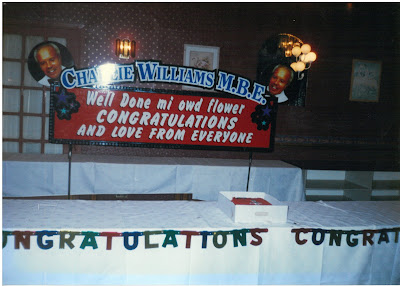
Decorated table and hall for Charlie Williams' MBE party. There is a banner on the wall reading 'Charlie Williams M.B.E. Well Done mi owd flower. Congratulations and Love from Everyone!'. The banner is flanked by two photos of Charlie
Photo from a party thrown to celebrate Charlie Williams' MBE
Image courtesy of Barnsley Museums & Archives


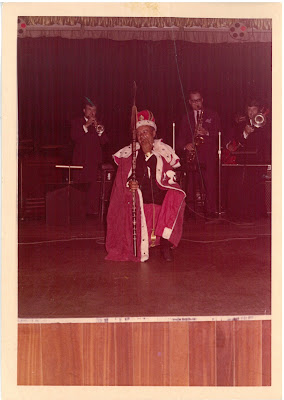
Charlie dressed in a royal robe and crown, and is holding a spear decorated with insignia of a tribe, as opposed to a sceptre similar to the Crown Jewels. He is seated, and looks quite bashful! There are people playing trumpets behind him
Charlie Williams on stage, dressed in royal regalia with a spear, at the party to celebrate his MBE
Image courtesy of Barnsley Museums & Archives


Some Black British comedians, such as Lenny Henry, argue that Charlie Williams' popularity at least partly derived from the racist society at the time. In the 1970s, the BBC still produced television shows where ‘blackface’ was a key feature of comedy, adding to racial hostilities in Britain.  In Henry’s view, Williams often told jokes at the expense of Black people to get laughs from the white audience. 


Due to changing attitudes and societal progression about what should be accepted in the entertainment industry, Williams' career as a comic subsided. Nevertheless, upon reflection on his fame and comedy success, Williams articulated, “I don't have any regrets…I told jokes that I thought would suit the audience”.

Charlie Williams died in September 2006, having lived with Parkinson's disease and dementia. Williams had an extraordinary life: one of the first Black post-war professional footballers and the first famous Black British television comedian.

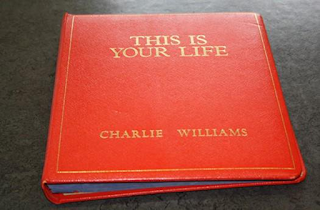
A red leather-bound book with 'This Is Your Life - Charlie Williams' embossed in gold
The "This is Your Life" book Charlie Williams received after going on the television programme

He is fondly remembered by his former neighbours:

“He was a terrific singer…He’d always got a smile… He were a grand fella…People used to come for his autograph and he never turned them away…He talked in broad Yorkshire.”

[Extracts from an oral history interview with Harry Godber, Upton, May 2017]

His Yorkshire identity was essential for his popularity, and thus he is seen by many as a local hero. But his legacy is complicated. Williams' comedy about his race was 'of its time' and would likely be felt inappropriate or offensive today. 

However, some argue that Williams bridged a gap between Black and white communities through the skill of comedy and entertainment. 

He endured racism and prejudice during his career but paved the way for Black Britons to make appearances on national TV.  


With thanks to the Wakefield Council BAME Forum for their comments and feedback, and Barnsley Museums and Archives for their help and providing permission to use their photos. 

For other blog posts in our Black History Month 2022 series, see: