Monday, November 20, 2023

100 Years of Collecting: Amazing Archaeology (Anglo-Saxons to Civil Wars)

We’re picking back up our time-travelling archaeological adventure with the Anglo-Saxons!

It follows on from our previous blog exploring prehistory to the Romans.


Anglo-Saxons and Vikings

In the 5th century AD central Roman rule collapsed and Britain dropped out of the Roman empire. Small kingdoms began to emerge in Britain.

In the Wakefield area the British kingdom of Elmet formed. In turn this was taken over by the Anglo-Saxon kingdom of Northumbria. 

Very few objects survive locally from the Anglo-Saxon and then Viking periods. This makes what we do have even more special! 

We have these two spearheads in Pontefract Museum:

A pair of long thin iron spearheads in a display case, they are partly corroded but generally well preserved


We also have part of an elaborately carved stone cross shaft on display at Wakefield Museum

It dates to the 9th century AD, and was found being used as a doorstep in a shop on Westgate 1000 years later!

A tall thin stone cross shaft with carved looping patterns. The cross and base have been recreated and are painted in blue, red and yellow.
The Anglo-Saxon cross shaft at Wakefield Museum, completed with reconstructions of the base and cross. These would have been painted in bold colours.

The most spectacular Viking find from our area is the Stanley Ferry Viking log boat. This is on display in Wakefield Library, kindly lent by York Museums Trust.

Remarkably well-preserved fragments of a Viking-era log boat, displayed on a frame that demonstrates what the full boat might have looked like.
The Stanley Ferry Log Boat at Wakefield Library 

The Norman Conquest

The Anglo-Saxon and Viking periods in Yorkshire ended with the Norman invasion of 1066 by William the Conqueror.

Although we don’t have many objects from the Norman period, we do have two awesome places where their legacy can be seen: Pontefract Castle and Sandal Castle.

Part of the stone keep at Pontefract Castle
Pontefract Castle, built in 1070 by Ilbert de Lacy

The standing stone remains at both these sites today are the reinforced replacements for the original Norman wooden buildings. 

These castles were key to turning William’s battlefield victory at Hastings into long-lasting conquest. They maintained dominance over the strategic landscape and the everyday life of local residents.

The main remains of Sandal Castle, an inner stone wall with two archways and the remains of a further part of the Castle to the right
Sandal Castle, probably built in the 12th century by the de Warenne family.


The Normans didn’t just build castles, however. They also built religious houses such as St John’s Priory in Pontefract. 

When this site was excavated in the 1950s and 1960s, some of the most interesting finds came from graves in and around the church.

This small cross was found around the neck of its owner. It is made of jet (the fossilised wood of the monkey puzzle tree), which was likely washed up on the beaches near Whitby.

A small stylised black jet cross with a series of circles engraved into its surface
The jet cross found at St John's Priory, Pontefract

You can see it for yourself at Pontefract Museum! It also features in the 100 Years of Collecting Online Exhibition.

Lost and Found

Most archaeological finds weren't originally as carefully placed in the ground. 

Many were lost, like this spear head, which was found in the Portobello estate near Sandal Castle. It was probably left behind during the bloody Battle of Wakefield in 1460.

A long pointed iron spearhead, which looks bumpy now due to corrosion before it was excavated
An iron spearhead, probably from the Battle of Wakefield in 1460

Other items were broken and thrown away, like these pottery fragments.

An array of pottery fragments, mostly curved, one part with a boar's face
Pottery fragments found at Sandal Castle

Although these fragments may not look impressive at first, when reassembled they from a portable urinal decorated with a boar’s head! 

Given that they were found at the Yorkist stronghold of Sandal Castle, and the boar was a symbol of Yorkist king Richard III - could it be that this was actually used for the ‘royal wee’?

A ceramic portable urinal, with a grey ceramic boar decoration. There's a handle to hold it in place and a hole to, well you know.
We carefully put the boar’s head decoration back together from its pieces. It is displayed alongside a replica of the urinal at Wakefield Museum.


We don’t know where the urinal was made but only a few miles away a major pottery industry was just beginning. 

Pottery making in Wrenthorpe became so important that the village became known as ‘Potovens’ after the kilns the pots were fired in.

Wrenthorpe pottery was distinctive, with dark colours and shiny glazes. This jug is a prime example! It was also found during excavations at Sandal Castle.

A tall brown ceramic jug with handle and off white leaf pattern on the front.
A Wrenthorpe jug, on display at Wakefield Museum and in the 100 Years of Collecting Online Exhibition

The English Civil Wars

A second Wrenthorpe pot also makes our 100 Years of Collecting list - but this time because of its contents!

The Ackworth Hoard consists of nearly 600 gold and silver coins, all buried in a Wrenthorpe pot, along with a gold ring.

A partially broken small brown pot with various gold and silver coins spilling out of it. There is also a gold ring.
The Ackworth Hoard


It was buried in the chaos of the Civil Wars during the siege of Pontefract Castle in the 17th century. It had probably belonged to a Royalist supporter, who wanted to prevent it from being taken by the Parliamentary troops billeted in Ackworth. For whatever reason, the person who buried it was unable to come back and retrieve it. 

The coins in the Ackworth Hoard were worth £85 and 12 shillings. This was a lot of money - around 7 years’ pay for a foot soldier during the Civil Wars.

The hoard remained untouched in the pot for over 350 years – until it was discovered in someone’s garden in the 20th century! 

You can see it for yourself on display at Pontefract Museum.

Even in the middle of a siege, the soldiers in Pontefract Castle needed paying. Being cut off from the outside world made this difficult. 
Their answer was to create their own home-made coins from reused silver.

The silver would come from luxury tableware and candle-holders owned by the richest members of the garrison. The silver objects were cut up or melted down and reshaped. The 'siege coins' were then cut from the resulting silver sheet. 

You’ll notice that siege coins aren't circular in shape like ordinary coins. This is because it was much easier to cut a straight edge than a curved one!

Diamond-shaped silver siege coin, with image of Pontefract Castle and the year 1648 engraved on the front
One of the siege coins produced at Pontefract Castle

This example of a Pontefract Castle siege coin is in the Online Exhibition and on display in the Visitor Centre at Pontefract Castle. 

It has a standard design for these siege coins featuring an image representing the castle itself. It includes the year it was created and the Castle was under siege - 1648.

It also has a morale boosting inscription, which translates as "while I breathe I hope".

Reverse of the diamond-shaped siege coin with Charles I's royal cipher roughly stamped on the back. Part of it is cut off when the coin was cut,
Reverse side of the siege coin, featuring Charles I's royal cipher.


That brings us to the end of our amazing archaeology 100 Years of Collecting highlights!

There’s lots more objects exploring the many and varied stories of the Wakefield district in our Online Exhibition.

Tuesday, November 14, 2023

New exhibitions at Pontefract Museum

Two new exhibitions have just opened at Pontefract Museum!

Ladies who Launch: Celebrating Pontefract's Women in Business

13 November 2023 - 19 October 2024
Free - no booking required

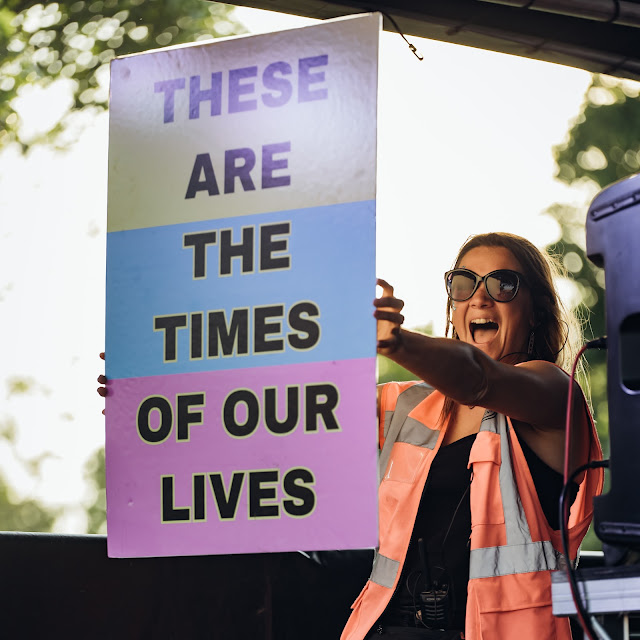
Rachel, one of the Yonder Events organisers, holding up a sign that says 'These are the times of our lives' on stage
Yonder Events bringing the vibes at their famous Yonder at the Castle event

Explore the fascinating history of female entrepreneurs in Pontefract in Ladies who Launch, a new interactive and immersive exhibition.

Get hands on and try some of the trades from past and present.

Step back in time to sample the sights and scents of Victorian Pontefract. Discover the local women leading businesses in sometimes surprising industries.

Celebrate the success stories of today’s inspirational businesswomen - from indulgent skincare and beautiful bouquets to therapeutic yoga and exhilarating events.

Tell us about the amazing women in your lives with our comment wall!

The exhibition features local entrepreneurs Michelle and Karen (Michelle's Flowers Ltd), Rachel and Hayley (Yonder Events), Emma (Santosha Yoga Studio) and Hollie and Lorna (Wild and Wood Skincare).

A fantastic team of Volunteer Researchers conducted research into four local Victorian businesswomen. Many thanks to Alice, Jennifer, Julia and Samuel for helping us to share these stories.


Boxed In (From Whence You Came) by Fern Woodhead 

13 November 2023 - 19 October 2024
Free - no booking required

A black and white oil pastel self-portrait of Fern, trying to squeeze themself back into a box. The box reads 'Defective - return to creator'
'Boxed In (From Whence You Came)' by Fern Woodhead, now on display at Pontefract Museum

Boxed In (From Whence You Came) is a brand-new artwork by Pontefract’s own Fern Woodhead (they / them).

The artwork explores Fern’s feelings about “being a queer person in an inherently non-queer society.” The striking oil pastel self-portrait is a response to Fern’s identity as a non-binary person and lesbian.

The display also features supporting commentary written by Fern along with personal items they have kindly lent for the exhibition. These include the Grayson’s Art Club exhibition catalogue in which they feature, and a hand-made crocheted lesbian pride flag.

Fern hopes that the exhibition will raise awareness and start conversations around sexuality and gender identity. Wakefield Museums & Castles are very proud to acquire and display such an important and inspiring artwork and to showcase exciting local talent like Fern. The acquisition contributes to ongoing work to diversify the collection so that it represents a wide range of people’s lived experiences.

Fern says "With this exhibition, I hope that we can bring more awareness and start more conversations about identity – all of us have an identity, so why shouldn’t we talk about it?"

Fern's full commentary on 'Boxed In (From Whence You Came)' and more information

Visitor and access information for Pontefract Museum

Tuesday, October 31, 2023

100 Years of Collecting: Amazing Archaeology (Prehistoric to Roman)

Our 100 Years of Collecting Online Exhibition spans thousands of years of human history. We’ve got a little bit of everything, from a prehistoric hand axe to a Prime Energy drink!

This month, we’re focusing on some of our amazing archaeology collection highlights. We’ve got so much we’ll post it over two parts.

For part 1, join us on a whistle-stop tour from prehistory through to the Romans:

Prehistoric tools and technology

Did you know that some of the oldest evidence of human life in Britain comes from Wakefield?

It includes this hand axe, on display at Wakefield Museum. 
It was originally made between 500,000 and 200,000 years ago when humans first settled in Britain.

A brown and yellow mottled flint hand axe. It is in a sort of teardrop shape.
A Palaeolithic hand axe - on display at Wakefield Museum


It might not look like much today, but flint hand axes like this were crucial multipurpose tools. They were useful for skinning and cutting up large mammals such as mammoths or Irish elk. They were a key invention for human evolution.

These earliest humans were forced out during a long period of Ice Ages and only occasional traces of them can be found today. Our hand axe was found at Lee Moor near Stanley in 1889.


15,000 years ago

The next people to settle in Britain came after the end of the last Ice Age, 15,000 years ago. They followed the migration of large mammals into Britain’s cold, dry climate and open landscapes.

As the climate warmed, trees and forests formed. These were better suited to smaller mammals. Humans had to adapt their hunting techniques and technologies. The new settlers began to use composite tools like harpoons. These harpoons used lots of tiny flints called microliths, moving on from the single large pieces of flint used for the hand axe. 

A series of small pieces of flint, in shades of pale grey and brown, and various sizes - but much smaller than the handaxe
A selection of microliths on display at Wakefield Museum

The Bronze Age - around 5,000 years ago

By 5,000 years ago, communities were working together to clear forests and begin farming. People were beginning to live in permanent settlements rather than moving around the landscape with the seasons. 

New technologies also reached Britain, like pottery and metalwork. Metal was helpful for the new styles of shafted axes needed to clear woodlands for farming. 

One of our beautiful bronze axe heads features in the Online Exhibition. It was found as part of the Smalley Bight Hoard.

Small bronze axe head, with three raised ribs running along the blade. Well preserved.
The bronze axe head - the loop would have helped fix it to a (probably wooden) handle.

You can see more on display at Wakefield Museum and Castleford Museum!

Burials: bronze and bones

As people settled into permanent homes, different social classes began to form. The emerging differences in wealth and power become visible in the archaeology.

People who had become wealthy and powerful began to bury their dead in individual graves. This was a change from the shared communal graves that had typically been used. Wealthy people were often buried with very expensive belongings.

Display case containing bronze age burial finds, some ceramic and some metal
Display case containing local Bronze Age burial goods at Castleford Museum

These very fine Bronze Age burial goods are on display at Castleford Museum. They include a bronze dagger and stone wrist guard. 

These came from burials in the landscape around Ferrybridge Henge, which was an important settlement for hundreds of years.

The most important finding from the Ferrybridge Henge is the incredible chariot burial from Ferry Fryston. Chariot burials are very rare, and this one was even more unusual because the chariot was buried whole alongside the rider.

The remains of an Iron Age chariot, displayed - 2 iron tires, 4 nave hoops, 2 linch pins and 2 horse bits
The Ferry Fryston chariot burial at Castleford Museum

Normally, chariots were taken to pieces before burial. To bury it whole meant digging a very large hole for it! 

This chariot is also unusual in that it couldn’t have actually been used for moving around. The wheels are different sizes and some of the bronze fittings were just for show - they are hollow and not nearly strong enough. 

However, it still taught us a lot about how chariots were made and how they worked.

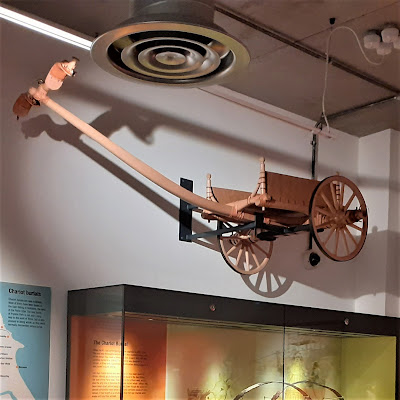
A modern-day reconstruction of the chariot, with two large wheels connected to a square sided seat, and a long bar reaching out to be connected to two horses
A representation of what experts think the chariot would have looked like

Studying the bones of the body in the chariot has revealed that they belonged to a 30 to 40-year-old man. He would have been about 1.70 metres or 5 feet 7 inches tall. 

Modern archaeological scientific techniques have revealed even more about the burial. Radiocarbon dating has shown that the chariot was buried about 200BC, and isotope analysis tells us that the man buried in the chariot was not originally from the Castleford area.

You can see the chariot burial in all its glory at Castleford Museum!


Roman Castleford - just under 2,000 years ago

The Ferrybridge Henge area stopped being as important when the Ancient Romans came to Yorkshire.

In 71 AD the Romans built a fortress at York and a road linking it to another fortress at Lincoln. Around the same time, they built a fort at Castleford, where this road crossed the Aire.

The Roman army is known for marching great distances along the roads they built. This was possibly in part because of the hob-nailed sandals the soldiers wore. Examples of these sandals were found during excavations in Castleford. 

Some of the sandals were so well preserved that re-enactors use replicas based on them and call them ‘Castlefords’!

The remains of a leather ancient Roman sandal, remarkably preserved. It has straps going across the foot and around the ankle
The well-preserved remains of an Ancient Roman leather sandal found in Castleford

The Roman way of life was adopted by many people in the areas they conquered. However, the Romans also keenly took on elements of those local cultures, particularly their gods and spirits.

One example is the altar to Brigantia, the goddess of the defeated tribe on display in Wakefield Museum. 

We also have a stone dedicated to the nymphs, local water spirits of the Aire. It features in the Online Exhibition and is on display at Castleford Museum:

Remains of a carved dedication stone to the Nymphs, featuring two female heads
The stone dedicated to the nymphs, on display at Castleford Museum

More on Roman Castleford


We hope you enjoyed this trip back in time through our amazing archaeology!

Ready to carry on the adventure? Click here for Amazing Archaeology (Anglo-Saxons to English Civil Wars)

Wednesday, October 11, 2023

What Wakefield Wore

In 2025, we'll be opening our New Library and Museum in the former BHS Wakefield building! 

Digital Volunteer Rebecca has been looking back at BHS Wakefield's history, and explores how it influenced 'what Wakefield wore' in this guest blog:

BHS Wakefield - at the heart of Kirkgate

The department store British Home Stores (commonly referred to as BHS) was founded in 1928 and ran for a total of 88 years. 

There were over 160 BHS stores, located at the heart of high streets across the country. They all closed in 2016.

BHS Wakefield opened in the 1930s on Kirkgate and quickly became popular with local residents. The store mainly sold home goods and clothing for men, women and children. It later also expanded to food. 

BHS Wakefield followed the ethos of encouraging local people to ‘buy British’.

 
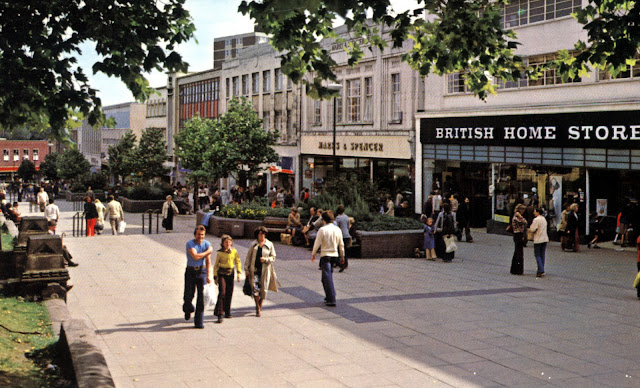
People walking along Kirkgate in the 1970s, with BHS and Marks and Spencer on the right hand side
Kirkgate in the 1970s - BHS is on the right

John G was a Manager at BHS Wakefield. He remembers that “BHS in the 1970s was very different to the store that entered the 21st century”. 

Over the years, the Wakefield branch underwent many changes. These included increasing the size of its sales floor, beginning to sell a wider range of merchandise and displaying their stock differently. 

Despite these changes, BHS was always renowned for looking after their staff members and creating a close-knit community.

Staff take to the stage

Throughout the 1960s and 70s BHS’s ‘ready-to-wear’ clothing made fashion trends accessible for everyone, including their own staff.

In the 1970s, the staff of BHS Wakefield staged their own fashion show to showcase the clothes available to buy in the store at the time. 

A member of the ‘You know you have lived in Wakefield when…’ Facebook group fondly remembers that the fashion show was held at Unity Hall and that it even made the local newspaper!

The fashion show featured many sought-after characteristics of 1970s fashion, such as floral prints, embroidery, synthetic fabrics such as polyester, athletic wear, different styles of dresses and a large array of nightgowns.

A staff member wearing a belted shirt dress, red neck scarf and sandals
Photo courtesy of John G

In the photo above a staff member is wearing a neutral-coloured shirt dress paired with bold red accessories. 

Dresses in boxy styles such as these became popular in the 1970s. They followed the more ‘masculine’ style of women’s clothing which was seen in shirt dresses of the 1950s. 

Worn with heeled shoes and an on-trend neck scarf, they are showing how these dresses can be styled to look stylish, yet comfortable. 

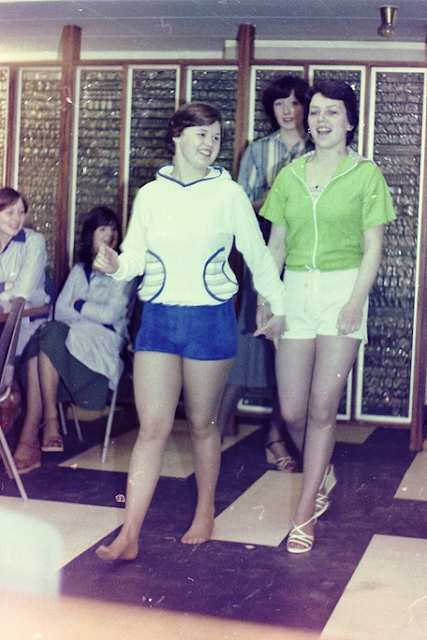
Another popular trend at the time was bright coloured athletic wear, as shown modelled here:

One staff member dressed in a white and blue hooded top and blue shorts, followed by another wearing a green zip up short-sleeved shirt and white high rise shorts
Photo courtesy of John G

High-rise shorts are seen paired with hoodies and zip-up tops which show how sportwear began to be seen as fashionable rather than purely practical. 

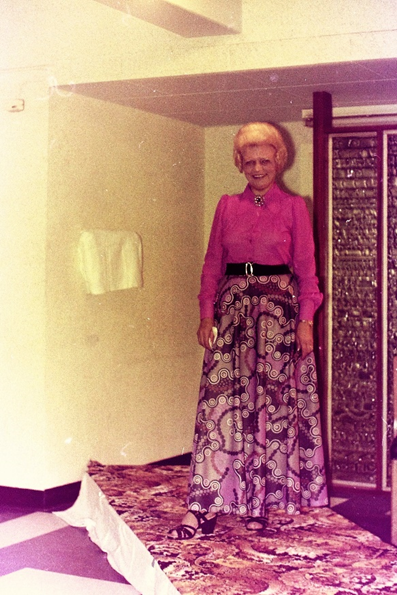
A staff member wearing a bright pink shirt tucked into a maxi skirt with a bold purple, pink and brown swirly design
Photo courtesy of John G

Fashion of the 1970s is known for its bold colours and prints, as in the photo above. 

Created in the 1960s, psychedelic prints, such as the one used to make this skirt, featured intense colours and flowing patterns. Here the swirls of different shades of purple come together to create the bold design of this long flowing skirt, also part of the stock at BHS Wakefield.

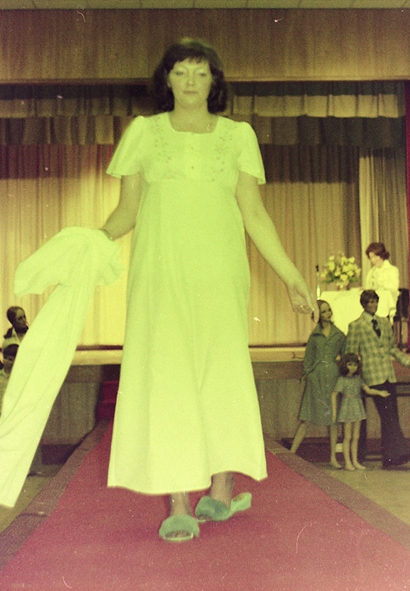
A staff member walking along a red carpet wearing a full-length white night dress and fluffy slippers
Photo courtesy of John G

One of the most prominent items of clothing showcased in the BHS Wakefield fashion show is their range of flowing nightgowns for both women and children. 

From long gowns made from satin fabrics with embroidered flowers, to shorter sheer styles with lace details, the variety of these nightgowns shows their popularity within Wakefield in the 70s.

A pair of children wearing full-length nightgowns walking along a red carpet, one is also holding a candle
Photo courtesy of John G

Special thanks to John G for sharing his memories and the photos featured in the article and members of local Facebook groups who gave details of their time at BHS.

We want to know ‘What Wakefield Wore’ in the 1970s! Were you inspired by the fashion show? 

What parts of 1970s fashion would you bring back today - or never want to see again? 

Let us know in the comments!

Click here to find out more about our New Library and Museum project

Thursday, October 5, 2023

The First Wakefield Museum

Wakefield Museum has now existed in some form for 100 years!

The doors of Wakefield’s first civic museum and art gallery opened at Holmfield House in Thornes Park in 1923. 

It was formally opened on 10 October 1923 by the Mayor, Councillor Harold H. Holdsworth.

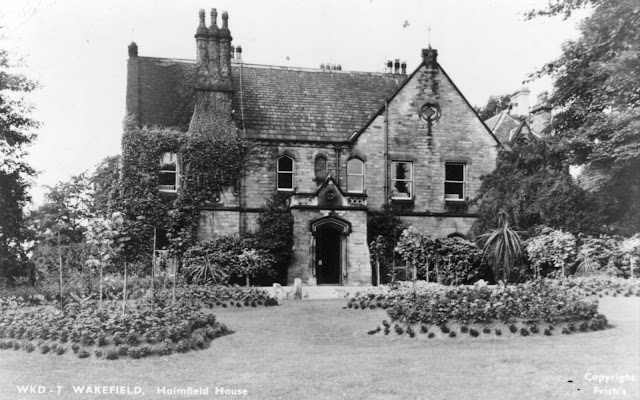
Holmfield House situated in Thornes Park, a pretty but relatively small building surrounded by plants and shrubs
Holmfield House in the 1940s

In his speech, the Mayor hoped the museum would inspire civic pride at the city’s long history. 

He said it would be a place of both education and recreation, somewhere that the people of Wakefield could go to escape the hustle of city life.

Invitation card with the City of Wakefield crest, and message 'The Museum Committee request the pleasure of the company of D.H. Crowther and friend at the formal opening of the Wakefield Museum at Holmfield, on Wednesday, the 10 October 1923, at 3pm, by the Right Worshipful the Mayor (Councillor Harold H Holdsworth, J.P.)'
Formal invitation to the opening of Wakefield Museum on 10 October 1923

Guests at the opening were served tea in the refreshments room and treated to performances from an instrumental quartet. The museum was specially decorated for the occasion with floral displays, including orchids.

Printed programme for the formal opening, with the Mayor opening the Museum at 3pm and tea served at 4pm
Programme for the Formal Opening of Wakefield Museum & Art Gallery on 10 October 1923

The first curator, Harold Parkin, had gathered a small but impressive collection for display. It included bullets and cannon balls found at Sandal Castle, Ancient Roman coins, and a night watchman’s Waits badge. There were also donations and loans of furniture, paintings and armour.

Visitors enjoyed displays of archaeology, Egyptology, natural history, social history and art - and, of course, the all-important tearooms!

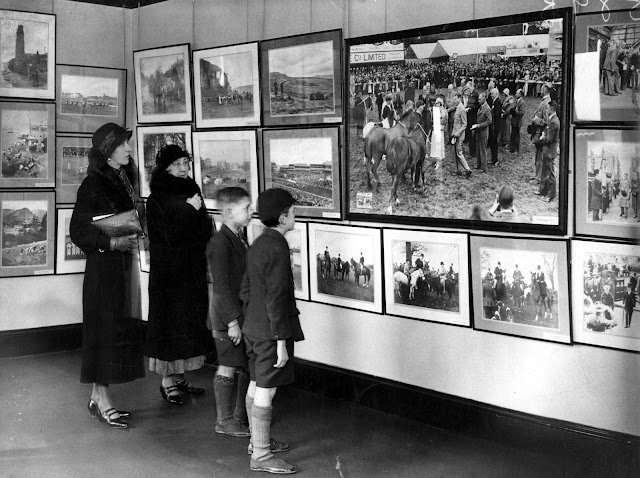
Two women and two young boys, all very smartly dressed, viewing a photography exhibition. Lots of framed photographs are hung together very closely, completely covering the walls.
Visitors to a photography exhibition at Holmfield House in the 1930s - we do things a bit differently today!

The museum was described by the Wakefield Express as “a great step forward in our civic life”.

The Holmfield House museum proved very popular and by 1934 was attracting over 40,000 visitors a year.

By 1956, Wakefield Museum left Holmfield House for the former Mechanics Institute on Wood Street. The displays included popular recreated room scenes from history. 

In 2012, we moved to the city’s newest civic building, Wakefield One, where you can find us today!

Amongst many other things, the uniforms worn by our brilliant Visitor Experience Assistants have changed significantly over time! 

This drawing shows the inspiration behind the uniform from the 1930s:

A drawing of a man in fitted almost hotel porter style jacket, trousers and cap that reads 'Empire'.

And here's Visitor Experience Assistant Jade today (also showcasing our new What's On for Families Guide!):
Our Visitor Experience Assistant Jade holding up one of the What's On guides in the Victorian Kitchen at Wakefield Museum

What memories do you have of visiting the Wakefield Museums of past and present? Let us know in the comments.


Online Exhibition '100 Years of Collecting' - looking at our history through 100 objects

Tuesday, September 26, 2023

Wakefield's Sporting Heritage

When it comes to sporting heritage, Wakefield District has lots to celebrate… even more than you might think!

We've dug out some sporty showpieces from our collection, many of which also feature in our 100 Years of Collecting Online Exhibition.

We are Rugby League

The Wakefield district is often defined by Rugby League. It both unites and divides our communities.

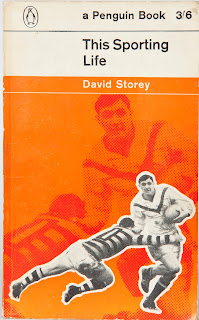
David Storey encapsulates this in his classic 1960 gritty northern novel, This Sporting Life:

Front cover of This Sporting Life, with a rugby player tackling an opponent
Our copy of This Sporting Life, on display at Wakefield Museum

The story follows a Wakefield Trinity player as he navigates his sporting career and his love life. In 1963 a film version starring Richard Harris was released to rave reviews. 

Belle Vue stadium features as a key location in the film and many residents remember being paid to attend as extras in the stands.

Most local people are close followers of one of the big three teams: Wakefield Trinity, Castleford Tigers and Featherstone Rovers. 

We have some fantastic objects telling the stories of the clubs, covering their historic victories and record-breaking achievements.

Iconic objects include this thick woollen jersey worn by Wakefield Trinity’s Harper Oliver Hamshaw way back in the 1880s: 

A thick woollen button-up jersey, navy blue with a red horizontal stripe across the chest and the arms.
Harper Oliver Hamshaw's rugby jersey

This was a time when Trinity shaped the creation of professional rugby league by paying their star player, three-quarter back, Edward ‘Teddy’ Bartram, a salary of £52. This made him the first professional rugby league player.

Professional sport would be nothing without the supporters! 

Telling local fans' stories is just as important as that of the players. This rosette was proudly worn by a Featherstone Rovers supporter when Fev reached the Rugby League Challenge Cup Final in 1974:

A blue and white rosette with 'Featherstone R', 'Wembley' and a picture of the trophy on it
A fan's Featherstone Rovers rosette from the 1974 Rugby League Challenge Cup Final


Local players didn't only capture hearts and minds - they smashed records. 

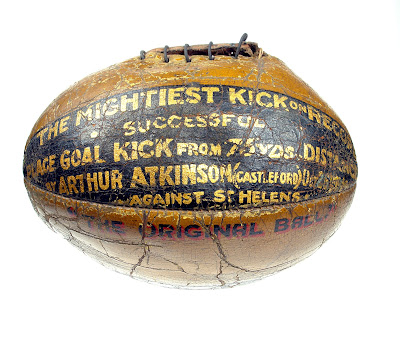
This rugby ball was used by Arthur ‘Brus’ Atkinson to make a record goal kick of 75 yards in Castleford's victory against St. Helens, on 26 October 1929. 

The record still stands 94 years later!

An old hand-stitched rugby ball with the details of Atkinson's achievement written on it
Arthur Atkinson's record-breaking rugby ball


But - it's not just rugby league Wakefield makes waves in!


Super Sharp Shooter: Stephanie Park

Stephanie Park nee Hopley (1940-2012) was a nurse and midwife in Wakefield. After losing a leg following an accident, she took up competitive shooting. Stephanie went on to become the World Disabled Champion in target shooting in 1987 and the winner of the Cardiff Open Shoot in 1989. This was the first sports event in which disabled and non-disabled competitors took part equally. 

She was also a world champion athlete in field sports and archery.

Stephanie in action, aiming her rifle while in her wheelchair. She has short, dark curly hair and is wearing a leather jacket and jeans.
Stephanie in action

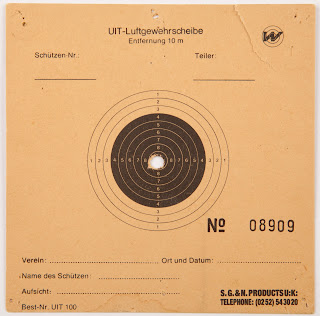
She hit all 10 shots through the central ring of this target shot at the 1989 National Small Bore Rifle Association Championship, and rightfully kept it as a souvenir! It features in our 100 Years of Collecting Online Exhibition:

A square cardboard target shot with all 10 shots through the central ring
Stephanie's keepsake target shot from the 1989 National Small Bore Rifle Association Championship 

Stephanie was also a disability rights campaigner and community leader. Her proud son Daniel kindly donated her archive to our collection in 2014.

Click here to read more about Stephanie's incredible life and career. 


Tour de Force: Barry Hoban

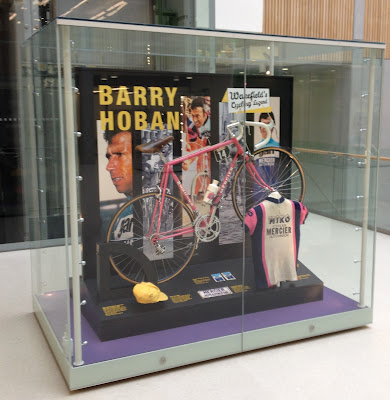
Barry Hoban is a former professional cyclist from Wakefield who rode during the late 1960s and early 1970s. 

He holds the record for the most Tour de Frances completed by a British rider – having finished 11 of the 12 he started between 1965 and 1978. 

He was also the first Briton to win two consecutive stages of the Tour, a feat not matched until 2008!


Square glass display case featuring photos and objects relating to Barry Hoban's career, including a pink road bike and pink, white and blue jersey
A display from 2014 showcasing Barry Hoban, featuring one of his bikes and jerseys

A Supporting Role: Sykes & Slazenger

As well as our sporting stars and top teams, Wakefield District has a very proud heritage of sports manufacturing.

In 1870 a saddler’s apprentice from Horbury founded William Sykes Ltd. Soon he was the chairman of a thriving international business. Sykes produced equipment for a huge variety of sports, from billiards to boxing, crown green bowling to croquet. 

Advertising poster for 'Choose a Sykes Model', with images of the EDB, the Blue Riband, the Ruby and the Alpha rackets, and the taglines 'Senior Service' and 'Simply Splendid - none better'
A vintage Sykes advert from the 1930s

Sykes eventually became part of the Dunlop Slazenger empire, pioneering ground breaking new products and technologies. For more than a century, Horbury was a centre of excellence and innovation in sports production, supplying top competitions like the FA Cup and Challenge Cup.

When Australian legend Don Bradman maintained a test cricket batting average of 99.9 over his career (1928 – 1948), he did so using cricket bats made in Horbury. The Don Bradman endorsed signature cricket bat became a very popular and long running brand of bat for Sykes, and continued after the company merged with Slazenger:

Old wooden cricket bat, engraved with 'Sykes, Don Bradman - Autograph' and Bradman's signature
A Don Bradman signature cricket bat


When England won the World Cup in 1966, they did so kicking a ball made here in Horbury. We've got one of the footballs made for the Final on display at Wakefield Museum:

Bright orange hand-stitched Slazenger Challenge 4-Star football
One of the Slazenger 4-Star Challenge footballs made for the 1966 World Cup

In 1988 German Tennis ace Steffi Graf became the first (and still only) player to win a Golden Grand Slam (she won each of the four Grand Slam tournaments and an Olympic Gold medal all in one year). 

She did so using a tennis racket designed and made in Horbury - The Dunlop 200G Max:

A purple tennis racket with green and brown details and the Dunlop logo
A Dunlop 200G Max racket, the type used by Steffi Graf to win her Golden Slam

So, yes - we're pretty proud of our sporting heritage!

Find out more:

 
Staff Pick - Wakefield Trinity and Me