Showing posts sorted by date for query waterton. Sort by relevance Show all posts

Thursday, October 31, 2024

Lighting up Wakefield: guide to The Timekeepers by Illuminos

This year's Light Up Wakefield (part of Our Year - Wakefield District 2024) invites you to see spectacular digital installations and experience the city in a whole new light!

One of the 2024 installations is The Timekeepers by Illuminos, which will be projected onto County Hall. 

It is a projection mapping piece based on the 300-year old story of Wakefield-born genius John Harrison. Harrison set his mind to the great mystery of the age – the perfect measurement of time and space. 

The Timekeepers celebrates the great variety of heritage, culture and arts that can be discovered across the Wakefield district.

The installation flies through time and tells stories, large and small from the Wakefield district. 

We're extremely excited, as our collections play a big part in telling the story! It sees some of our tiniest objects made gigantic on the beautiful facade of County Hall.

So what objects can you expect to see in The Timekeepers? Here's a guide to some of the highlights - some you might be familiar with, and others you might not!

The Waterton Clock, 1670s

An ornate lantern clock from the seventeenth century, about 40 centimetres tall, featuring silver nature designs, a domed top, and a swinging pendulum

This is a gorgeous lantern clock which was owned by the Waterton family for generations. 

Charles Waterton (1782 - 1865) of Walton Hall thought that the clock was once owned by Sir Thomas More (1478 - 1535). Waterton believed he was a descendant of More. 

More was Lord High Chancellor to Henry VIII - until he had him executed!

However, the clock was actually made over 100 years after the death of More. Nevertheless, it is a beautiful piece and lends itself brilliantly to The Timekeepers! It's also the oldest clock in our collection.

The 'Castleford Pig', around 1910

A tiny black wooden carved pig, with a looking glass in its belly containing tiny replications of photos of Castleford

The 'Castleford Pig' is literally a window through time! 

Inside this tiny carving of a pig is a looking glass. When you hold the object up to the light, you can see six pictures of Castleford from the early 1900s. 

It's an example of a Stanhope picture viewer, and novelty versions were very collectable. They came in many shapes and sizes, and could feature lots of pictures.

The Timekeepers is about incredible, huge visuals projected onto one of Wakefield's most spectacular buildings. 

So it's absolutely delighted us that our tiny pig, which is only about the size of a £1 coin, is going to be the size of County Hall! 

Glassware made by Bagley and Co Ltd in Knottingley, 1930s

A bright yellow glass vase with four handles and four little koalas on the handles
Although originally started as a bottle factory, Bagley's also made decorative glass. It became especially known for its vibrantly coloured glass developed in the 1930s.

However, there's a hazardous reason behind some of these brilliant colours - some were created using uranium, a radioactive element!

Coloured glass production ended in the 1940s when uranium was needed for atomic bomb development in the Second World War.

After the war, Bagley's went on to create a very dark black glass, known as 'jetique'. 

The eyepopping colours of Bagley's glassware makes it perfect to be projected in The Timekeepers. 

If you'd like to see more, there's a whole Glass Room at Pontefract Museum (don't worry, these ones aren't radioactive!) 

Yorkshire Forced Rhubarb

Inside of a forced rhubarb shed, a dark room with lots of stalks of bright pink rhubarb reaching to the sky

A celebration of Wakefield's heritage wouldn't be complete without rhubarb!

Thanks to good soil mixed with lots of ashes, horse manure and textile waste, and just the right amount of rain, Wakefield specialises in 'forced rhubarb'. The city forms part of the 'Rhubarb Triangle' with Leeds and Morley.

There's a display about the history of growing rhubarb at Wakefield Museum, where you can even hear it growing. The sound might surprise you!

You can also find out more about why Wakefield roots for rhubarb in this blog post.

Phenakistiscope discs, 1880s

A circular wooden phenakistiscope disc with illustrations of a horse and rider on the outer ring, and a jumping dog on the inner ring

They might be a bit of a mouthful to pronounce, but phenakistiscope discs are actually an early type of animation.

They were invented in the early 1800s, long before film or even photography as we know it. 

Our collection of phenakistiscope discs, including this one pictured, belonged to the Farrers. The Farrers were a famous clock-making family from Pontefract. Hence the link to The Timekeepers

The Illuminos team bring these discs to life through digitally replicating their analogue animation.

Playmakers - Sykes and Slazenger

A blue quiver with a leather strap, containing wooden arrows with coloured feathers
A Slazenger quiver of arrows, 1950s

Wakefield has quite the sporting heritage! Our Playmakers collection tells the story of how, for more than a century, Horbury was a centre of sporting excellence and innovation.

The factory at Horbury was first founded by William Sykes, and then became Slazengers during the Second World War.

Horbury-made sporting equipment supplied the World Cup, Challenge Cup, and was endorsed by sports stars including Steffi Graf and Don Bradman.


Commemorative marbles from A Reight Neet Aht, 1930s to 1950s 

A large glass marble with 'Castleford, Reight neet aht, April 21 1936' painted on it

Prepare yourself for a torrent of marbles to cascade down County Hall! And no, it's not just because we've lost ours... 

A game of marbles was a big deal in Castleford! From 1936 an unlikely and flamboyant charity event called 'A Reight Neet Aht' created a buzz at the Castleford Co-Operative Hall. 

Known as 'taws', these marbles contests raised money for Leeds Infirmary over the next 20 years.

The marbles for the tournament, along with glass trophies, were made in and around Castleford. They all look mighty impressive projected large in The Timekeepers!

You can don your gladrags for a glamorous game of marbles in A Reight Neet Aht at Castleford Museum.

The Wakefield Pageant, 1933

A photograph of a long chain of girls in matching outfits, with the girls on the outer sides of the 'train' carrying wheels, and a torch at the front
A group of girls from Thornes House Secondary School and Ings Road Central School acted as a 'ballet' steam train in the 1933 Wakefield Pageant!

The Pageant of Wakefield and the West Riding took place in June 1933 in Thornes Park, Wakefield. It celebrated Wakefield's past and present, and imagined the city's future.

A whole cast of schools and societies took part, each playing different roles from Wakefield's proud history. They also helped to make the costumes and lavish backdrops.

More than 2,000 performers took part in the Pageant over 10 performances. Thousands of people turned out to enjoy the spectacle.

Objects and photographs from the 1933 Pageant are projected alongside The Hatchling in The Timekeepers. The Hatchling was an amazing event during the summer of Our Year - Wakefield District 2024, which saw a dragon hatch in Wakefield.

The Wakefield Pageant was very much the 'Our Year' of 1933!

You can see a special art display inspired by the Wakefield Pageant by artist Louise Goult in the lower atrium of Wakefield One.

Anglo-Saxon cross, around 900 to 1000 AD

The remains of a decorated Anglo-Saxon cross shaft, topped and tailed by reconstructions of what the rest of the originally brightly painted cross might have looked like

This stone cross is the first evidence of a settlement in modern Wakefield. 

The cross was probably used for preaching, and it stood in Wakefield's marketplace until 1546. It then disappeared until 1861, when Edmund Waterton (son of Charles Waterton) rescued it from the demlotion of an old butcher's shop. The cross shaft had been used as a doorstep to the butcher's!

Not only is this object important in telling us about the creation of Wakefield, it was once a vibrant and colourful creation. 

The cross is on display at Wakefield Museum - it is on loan courtesy of York Museums Trust.

Friday, June 7, 2024

Robert Waterton of Pontefract Castle

You’ve probably heard of Charles Waterton of Walton Hall. But have you heard of Pontefract Castle’s 14th century Robert Waterton?

Charles Waterton

Most people in the district will associate the name Waterton with Charles Waterton of Walton Hall.  Waterton was a naturalist, plantation manager and explorer. 

He’s best known for his conservation work, building the world’s first nature reserve at Walton Hall in the 1820s. This was the subject of our A World of Good exhibition in 2021 - 2022.

Painting of Charles Waterton, dressed in a navy blue velvet jacket, cream/gold waistcoat and white ruffled shirt with a navy cravat. He is a white man with short dark brown hair, and has a serious expression on his face. He has a taxidermied red bird resting on his finger, and the head of a taxidermied cat sat atop a book
Charles Waterton painted by Charles Willson Peale in 1824. On display at the National Portrait Gallery.

But there were many more Watertons before Charles. The Watertons can trace back their ancestry for hundreds of years in the Wakefield area. 

Introducing: Robert Waterton, one of Charles Waterton's historically important ancestors.

Robert Waterton (1360 - 1425)

Robert Waterton was appointed to the post of Master Forester of Pontefract Castle in 1391.  He also served in the household of Henry Bolingbroke. 

In 1391 Pontefract Castle was a Lancastrian castle owned by John of Gaunt, Henry Bolingbroke’s father. Upon John’s death and the confiscation of the castle by Richard II, Robert Waterton remained loyal to Bolingbroke. 

He became Constable and Steward of Pontefract Castle. Waterton was later also appointed Master of the King’s Horses in 1399 when Bolingbroke returned from his banishment. Henry Bolingbroke became King Henry IV and took back all the possessions Richard II had confiscated from him.


Henry the fourth as a middle aged man, with curly brown hair and beard, wearing a crown, blue robe and holding a sword
Illuminated initial letter showing Henry IV from the records of the Duchy of Lancaster (Wikimedia Commons)

The new king needed to be sure that Richard II was kept safe and securely out of the way. 

Where better to send him, then, than to Pontefract Castle and his long-term supporter Robert Waterton?

Whilst staunchly loyal to Henry, Waterton was no fool. He gave up his own lodgings at the castle to accommodate the deposed Richard. He didn’t want to lock him in a dark cell somewhere just in case Richard returned to the throne..!

A gilded, larger-than-life portrait of Richard II, sat on his throne in full royal regalia.
Richard II, probably painted between 1385 and 1390. (Wikimedia Commons)
 

Richard II died at Pontefract Castle on 14 February 1400. Waterton was called to parliament to give evidence attesting to his death. He is also mentioned in William Shakespeare's 'Richard II'.

Later Watertons of Pontefract Castle

In later years, Pontefract Castle was responsible for many other famous prisoners. These included Charles Duc of Orleans.

The Waterton family continued to enjoy royal backing under Henry IV, Henry V and Henry VI. They racked up a prestigious list of titles up until the reign of Henry VIII.

When Henry VIII broke with the Catholic Church in the 1530s, the head of the Waterton family (another Robert) stayed true to his Catholic faith.

Henry VIII was so enraged with Robert. He wrote to him stating: “Waterton, I will take thy estate, but I will save thy life. Henry Rex”. The Watertons lost much of their land and money.

Despite this, the Watertons remained Catholic right through to Charles Waterton. Charles was widely known as a keen supporter of the Catholic faith. 

Want to discover more about the history of Pontefract Castle? View our interactive painting!

Friday, October 28, 2022

Black History Month 2022 - Update to Charles Waterton & slavery blog

In the final of our blog series for this year's Black History Month, we're looking at how ongoing research has led to an update to our Charles Waterton and slavery blog from 2 years ago.

Following the discovery of the will of Thomas Waterton, Charles' father, in the John Goodchild Collection at West Yorkshire Archives, we now have more information about Waterton's involvement in the family's plantation and with the enslaved workforce in Guiana. 

The update is as follows:

Aged 22, Waterton was sent to administer the plantations and the enslaved workforce on behalf of his family. He did this job for seven years (1805 – 1812). He might have received a salary for this work, but it is likely he was sent out in order to avoid paying someone outside of the family.

Charles’ father died in 1805, shortly after his arrival in Guiana. The will of Thomas Waterton, Charles’ father, which is in the John Goodchild collection with West Yorkshire Archive Services, reveals that Charles inherited the family home in Walton but did not inherit the family estates and the ‘slaves thereon’ in Guiana. Waterton managed the plantations on behalf of younger family members until they came of age to manage them themselves.

Thomas Waterton's will from 1805. It is a large, handwritten document on parchment paper
The Will of Thomas Waterton
Image courtesy of West Yorkshire Archives


For the other blog posts in our Black History Month 2022 series, see:


Monday, October 17, 2022

Spooky Stories Trail 👻

It's Spooky Season and we've been creeping around our sites looking for terrifying and terrific hidden treasures and tales 👀

We challenge you to tick them all off - if you dare! 

There's a bonus here from our Museum Store too... 


Castleford Museum – Witch Balls 🧙‍♀️


A large glass witch ball decorated with images of rattlesnakes, pigeons and other animals

Made at Castleford’s glass factories, these most magical witch balls were historically hung in windows to ward off evil spirits, spells and witches. 


Are they doing a good job? Find them in the Museum and judge for yourself… 
 
A large glass witch ball with a series of weird and wonderful animals on it, including a large Death's-Head Hawkmoth


Hint: they're hiding with the rest of our gorgeous local glasswork!


Wakefield Museum - Boa Constrictor 🐍

A large taxidermied boa constrictor snake in a glass case, coiled up


Picked by our Visitor Experience Assistants Jade and Kathryn, Waterton’s taxidermied boa constrictor snake watches you as you walk around around the room with his thin, slippery smile… 

Where has he slithered off to? 

Hint: he’s behind you...!


Pontefract Museum - The Green Man 🧝

A stone face carving of the Green Man
This stony face belongs to a representation of the Green Man. Although more of a pagan figure, this stone comes from St John’s Priory, near Pontefract Castle.

The stone is probably from a lectern, which would have been at the end of the dining hall where scriptures would have been read to the silent Cluniac monks.

Can you find him?

Hint: you’ll have to look low down!


Pontefract Castle - Richard II 👑

The remains of the bakery and kitchens area at Pontefract Castle
King Richard II was imprisoned at Pontefract Castle by his cousin, who became Henry IV. 


Although in Shakespeare’s
Richard III it says he was ‘hack’d to death’ in Pomfret’s ‘bloody prison’, he actually starved to death. Was it in protest or was he not fed? 

He was kept in the quarters above the Bakery at the Castle – can you find them? 


Sandal Castle - The Battle of Wakefield ⚔️

An artist's impression of the Battle of Wakefield

Did you know that the poem ‘Richard Of York Gave Battle In Vain’ to remember the colours of the rainbow is inspired by the Battle of Wakefield? 🌈

It happened on 30th December 1460 on Wakefield Green below Sandal Castle. Richard of York (the 3rd Duke of York) was Edward IV and Richard III’s dad, and he was killed in the Battle of Wakefield. 

Can you imagine hiding out in the Castle during a battle?


Bonus: Spooky Stories from the Store - Dame Mary Bolles' Bedroom Door 👻

A very old wooden door from Dame Mary Bolles' bedroom

Dame Mary Bolles lived at Heath Old Hall in Wakefield in the 1660s. 

She asked for the door to the bedroom she died in to be sealed up and for nobody to ever enter. 

50 years later someone broke the seal! 

It’s claimed that this released her spirit, making the door ‘haunted’…

Friday, March 11, 2022

Wakefield Museums & Castles shortlisted for 'museums Oscar!'

We are thrilled and proud to have been shortlisted for the Museums + Heritage Sustainable Project of the Year Award 2022, for our project, A World of Good.


Known as the ‘Oscars of the museums world’, the Museums + Heritage Awards celebrate the very best in the world of museums, galleries, cultural and heritage visitor attractions. Hundreds of entrants from around the world will battle it out to win one of seventeen prestigious awards. The Sustainable Project of the Year award is sponsored by the National Lottery Heritage Fund, and celebrates outstanding environmentally sustainable projects or exhibitions, which can demonstrate best practice in approaches to managing environmental impacts.


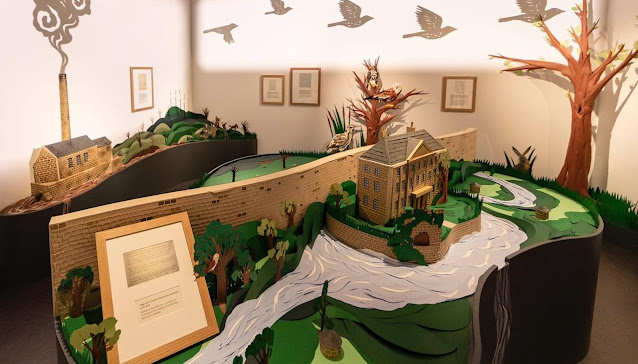
Wakefield Museums & Castles have been shortlisted for A World of Good, a project designed to inspire positive action on the climate crisis. At the centre of the project is the immersive, multi-sensory A World of Good exhibition at Wakefield Museum, which uses sculpture, animation and sound to bring the work of 19th-century environmentalist Charles Waterton to life. It asks visitors to sign up to an environmental manifesto and make a pledge to take real and meaningful action on the climate crisis.


Our Do A World of Good pledges are simple and practical ways you can make a difference.


Alongside the exhibition, we have produced educational resources for schools and communities, a social media campaign, and events and workshops designed to inspire and motivate you to make a change. Our team have also written an action plan to reduce the carbon footprint of our museums and castles.

“It is great to see the Museums & Castles team being acknowledged for this project, which addresses one of the most urgent contemporary issues we face. Museums play a vital role in engaging and educating people about the world around us and A World of Good is a perfect example of that.”

Councillor Michael Graham, Cabinet Member for Culture, Leisure & Sport for Wakefield Council


The winner of the Museums + Heritage Awards will be announced at the Museums + Heritage Show on 11 May 2022.


You can visit the A World of Good exhibition at Wakefield Museum until July 2022, or find out more about the project on our A World of Good pages on this blog.

Follow @WFMuseums #AWorldOfGood and #DoAWorldOfGood on Twitter for more content and join in the conversation on the hashtags - we'd love to hear how you are Doing A World of Good in your home, garden, work or lifestyle. 

Find out more about the awards and all the amazing shortlisted projects on the Museums + Heritage Awards website.


Friday, October 8, 2021

Our Museums Change Lives!

Wakefield Museums & Castles have been shortlisted for the Museums Association's Museums Change Lives Best Project Award 2021, for our project A World of Good.

The Museums Change Lives awards are awarded by the Museums Association, the sector body for museums in the UK, to recognise and celebrate outstanding practice by UK museums delivering social impact. They promote the best examples of work by museums and individuals that support communities and engage with contemporary issues. Previous winners of the award include National Museums Northern Ireland and the Jewish Museum London.

We have been shortlisted for the Best Project award for A World of Good, a project designed to inspire positive action on the climate crisis. At the centre of the project is the A World of Good exhibition at Wakefield Museum, which uses sculpture, animation and sound to bring the work of 19th-century environmentalist Charles Waterton to life. It asks visitors to sign up to an environmental manifesto and make a pledge to take real and meaningful action on the climate crisis.

Gallery view of A World of Good exhibition at Wakefield Museum

Alongside the exhibition, we have produced educational resources for schools and communities, a social media campaign, and events and workshops designed to inspire and motivate you to make a change. We have also written our own action plan to reduce the carbon footprint of our museums and castles.

Councillor Michael Graham, Cabinet Member for Culture, Leisure & Sport for Wakefield Council, said “It is great to see the Museums & Castles team being acknowledged for this project, which addresses one of the most urgent contemporary issues we face. Museums play a vital role in engaging and educating people about the world around us and A World of Good is a perfect example of that.”

The winner of the Museums Change Lives award will be announced at the Museums Association annual conference on 8 November 2021 and we'll share the news on our Twitter account.

You can visit the A World of Good exhibition at Wakefield Museum until July 2022, or find out more about the project here

Tuesday, November 3, 2020

Black History Month: Charles Waterton and slavery

Charles Waterton, the pioneering naturalist, explorer and conservationist of Walton Hall near Wakefield, also spent seven years as a manager of sugar plantations and enslaved people in Guiana in South America.

In 2019 Wakefield Museums & Castles began a research project to learn more about Waterton’s involvement with the practice of slavery. This final post in our 2020 Black History Month series outlines what we know so far and our plans for further research and changes to our galleries.


Content warning: this article discusses the Transatlantic Slave Trade. It contains some outdated terms and attitudes when quoting from historical sources.

Updated on 13 October 2023

Portrait of Charles Waterton, a middle-aged white man with short hair, in smart clothes. He is seated at a desk, with a taxidermy red bird perched on his finger, some books on the desk and a taxidermied cat's head on top of the books.
Charles Waterton by Charles Willson Peale in 1824. By this time Waterton had stopped working on plantations and returned to Europe, never to return to South America.


In the 1790s, Britain took over the control of Guiana from the Dutch. The land in the new colony was perfect for growing sugar and so had the potential to make lots of money for British investors. The Waterton family were among the many British people who rushed to buy land there, from wealthy merchants to poorer families. These sugar plantations exploited enslaved people to maximise profits.

The Waterton family and slavery

Waterton’s father and uncle each owned a plantation in Guiana:

              La Jalousie & Fellowship bought by Charles’ uncle, Christopher in 1797. In 1835 it had 292 enslaved persons.

              Walton Hall plantation bought by Charles’ father in 1805. It was sold in 1817 with 287 enslaved persons.

In his book, Essays on Natural History, Charles Waterton writes about how his family became involved in sugar and slavery:

"Our family found its way to the New World in the following manner: - My father's sister [Anne] was remarkably handsome. As she was one day walking in the streets of Wakefield, a gentleman, by name [Michael] Daly, from Demerara, met her accidentally, and fell desperately in love with her: they were married in due course of time, although the family was very much averse to the match. Soon after this, my father's younger brother [Christopher], who had no hopes at home on account of the penal laws, followed his sister to Demerara, and settled there."

Source: Waterton, Charles; Natural History Essays

The penal laws restricted Catholic involvement in government and business. Waterton and his family were Catholics. Despite his aristocratic home and heritage, Waterton was unable to use his title as a Lord. He also couldn’t work as a judge, officer in the army, or become an MP.

Charles Waterton’s involvement with slavery

Aged 22, Waterton was sent to administer the plantations and the enslaved workforce on behalf of his family. He did this job for seven years (1805 – 1812). He probably received a salary for this work. It is likely he was sent out in order to avoid paying someone outside of the family.

Charles’ father died in 1805, shortly after his arrival in Guiana. The will of Thomas Waterton, Charles’ father, now is in the John Goodchild collection with West Yorkshire Archive Services, reveals that Charles inherited the family home in Walton but did not inherit the family estates and the ‘slaves thereon’ in Guiana. Waterton managed the plantations on behalf of younger family members until they came of age to manage them themselves.

An illustration of the grand Walton Hall in its grounds
Walton Hall near Wakefield in 1830. Waterton’s father remodelled the house in the 1760s, long before he invested in slavery and sugar.

In 1833 Waterton was challenged over his family’s involvement with slavery. He wrote: 

"I never possessed a slave in my life, or any part of a plantation. From 1807 to 1812, at intervals, I administered the estate of an uncle, and others; during the period, the yellow fever and tertian ague kept giving me frequent hints that there was not much pleasure to be expected from being ‘surrounded by slaves and attendants’"

Waterton, Charles; Mag of Nat Hist.  July 7 1833. P.394

 Waterton finished working as a planation manager in 1812 and began his first ‘wandering’ in South America:

"In the month of April, 1812, my father (Thomas) and uncle (Christopher) being dead, I delivered over the estates to those concerned in them, and never more put foot upon them. In my subsequent visits to Guiana, having no other object in view than that of natural history, I merely stayed a day or two in the town of Stabroek (now called George Town), to procure what necessaries I wanted; and then I hastened up into the forest of the interior, as the Wanderings will show."


A painting of Waterton riding a caiman, surrounded by exotic animals, with Daddy Quashi and members of an Amerinidian tribe pulling on the baited rope
Waterton riding a caiman out of the Essequibo River in Demerara by Captain Edwin Jones, 1820s. Daddy Quashi, a formerly enslaved man, can be seen pulling on the baited rope with members of an Amerindian tribe.

Waterton on slavery

Waterton never campaigned to end slavery but he did speak out against it. In his book, Wanderings in South America, he writes against the practice but defends the treatment of enslaved people by plantation managers:

"slavery can never be defended; he whose heart is not of iron can never wish to be able to defend it: while he heaves a sigh for the poor negro in captivity, he wishes from his soul that the traffic had been stifled in its birth; but unfortunately, the governments of Europe nourished it, and now that they are exerting themselves to do away with the evil, and ensure liberty to the sons of Africa, the situation of the plantation slaves is depicted as truly deplorable, and their condition wretched. It is not so. A Briton’s heart, proverbially kind and generous, is not changed by climate, or its streams of compassion dried up by the scorching heat of a Demerara sun; he cheers his Negroes in labour, comforts them in sickness. Is kind to them in old age, never forgets that they are fellow creatures."

Source: Waterton, Charles; Wanderings in South America

In 1807 the transportation of enslaved people from Africa was abolished in the British Empire after a nationwide campaign. However, it did not end the practice of slavery in the colonies and the anti-slavery campaign focused on the treatment of slaves within the plantations. Waterton did not like this argument and wrote of kind treatment towards enslaved people. However, we do not know what conditions were actually like on the plantations he managed.

We do know that he taught taxidermy to John Edmonstone, who was enslaved to Charles Edmonstone, Waterton’s friend and future father in law, and that some formerly enslaved people accompanied Waterton on his famous expeditions in the rainforest.

When Britain finally abolished slavery in 1833, those that owned enslaved people received compensation from the government. The loan needed to pay the compensation was so big it was only paid off in 2015. As Waterton himself had not owned a plantation or any shares in enslaved people, he did not receive compensation, but some family members on his uncle’s side did.

Slavery and Wakefield Museum

Since 2020, Wakefield Museums & Castles have completed research into the Waterton family’s involvement in slavery. We have updated this article to reflect this and new interpretation has been installed at Wakefield Museum telling this important part of the Waterton story. This can also be accessed on our Charles Waterton and Slavery page. We are grateful to Wakefield Council’s Global Majority Race Equality Network (formerly the BAME Staff Forum) and the Black Family Forum for their contribution to the information.

We continue to explore the Wakefield district’s links to slavery and are committed to telling this story in our sites and programmes, including as we work towards a new Wakefield Library & Museum.

Related posts

John Edmonstone

Eliza, Anne and Helen Edmonstone

Sugar nippers not shackles: slavery in local history collections


Monday, October 26, 2020

Black History Month: Sugar nippers not shackles

For Black History Month 2020, Wakefield Museums & Castles are exploring four stories related to British slave ownership in the early 1800s. This week, we are focusing on our collections and how we can reveal hidden stories from objects that at first glance seem to be unrelated.


The story of the British slave trade and slave ownership is part of every town and city in Britain. Local history museums can tell the story too. Although most local museums do not have the shackles or whips used to subjugate those who were enslaved, we can show how the products and profits of enslavement reached every home in Britain, including Wakefield. 

It can be surprising how many different and diverse stories museum objects can tell.

The Triangle of Trade

An old printed and handwritten banknote from 1800
Banknote of the Wakefield Bank, Ingram, Kennett and Ingram, 1800

Captain Francis Ingram of Wakefield used the profits from trading in enslaved people to start Wakefield’s first bank. In the 1770s and 1780s he was a major figure in the slave trade, involved in 105 voyages, which took away close to 34,000 slaves from Africa. It is estimated that these ships delivered just over 29,000 people to the Americas, meaning that around 5,000 died making the journey across the Atlantic Ocean.

Ingram’s business was part of the so called Triangle of Trade. British merchants like Ingram sailed from ports such as Liverpool and traded goods for enslaved Black people from African merchants in ports along the West African coast. 

The enslaved people were tightly packed into ships, which then travelled across the Atlantic to the British colonies in North and South America and the Caribbean. Many enslaved men, women and children died in the crossing. The ships were unsanitary and overcrowded.

The industrial revolution in Britain in the 1700s and 1800s relied on the exploitation of enslaved people in the British colonies. The merchants traded the enslaved to plantation owners in return for the goods they would be put to work to grow and harvest. The key products were cotton, coffee, rum, sugar, and tobacco. These goods were then shipped back to Europe and made their way to wardrobes, kitchens, dining tables and pockets in Britain. Some would then complete the cycle and be shipped to Africa to be traded for more enslaved workers.


The products of slavery


The use of slave labour enabled mass production, meaning that expensive commodities became more affordable to less wealthy families and began to appear in homes across the country. The household objects associated with these luxury goods eventually arrived in our museum collections.

An ornate coffee pot, which looks like a tall thin teapot

Coffee pot, Newhall, 1820s


'Sugar nippers', a metal tool that looks like a pair of pliers or scissors with rounded edges

Sugar nippers, early 1800s

Sugar arrived at a household in a cone or ‘loaf’. It was broken up with a sugar axe or hammer and then nippers like these were used to cut off smaller chunks.


A ceramic ornate sugar bowl
Sugar bowl, D. Dunderdale and Co., Castleford, 1790 – 1821


A glass bottle labelled 'Jamaica rum'
Bottle labelled ‘Jamaica rum’ from a travel chest ‘cellarette’, late 1700s


An ornate metal tobacco box

Tobacco box, late 1700s


Shamefully, the lives of most enslaved people from the early 1800s are absent from history. But their stories and suffering are often hidden in plain sight in our collections and displays, and the social and industrial history of the nation. 


This is the third article in our Black History Month series looking at Wakefield’s links to slavery. The final post next week will consider how the Waterton family were entangled with the practice of slavery in the late 1700s and early 1800s and what Wakefield Museum is doing to address it.


Previous posts


Monday, October 19, 2020

Black History Month: Eliza, Anne and Helen Edmonstone

For Black History Month 2020, Wakefield Museums & Castles are exploring four stories related to British slave ownership in the early 1800s. In the second post of the series, we are looking at the extraordinary lives of three mixed race sisters.


Eliza, Anne and Helen Edmonstone were born (1807, 1812 and 1813) into the messy mix of colonialism, violence and indigenous tribes of British Guiana, and later married into the family of an eccentric Wakefield naturalist. Their story begins in the world of slavery and ends in environmental activism and the creation of the world’s first nature reserve.

The Edmonstone sisters must have made quite an impression when they came to Wakefield in the late 1820s. They were described as tall, dark and beautiful maidens but the darkness of their skin also marked them as outsiders. On a visit in 1845, the famous naturalist Charles Darwin described them as ‘Mulatresses’, his only comment on them (an abhorrent racial slur today) forged purely by their skin colour and their mixed race heritage.


Early life in colonial South America


Eliza, Anne and Helen were born in hot, humid and remote British Guiana in South America, three of four sisters and two brothers. Their Scottish father was a wood merchant named Charles Edmonstone and their mother was descended from Amazonian royalty, ‘Princess’ Minda, the daughter of an Arawak chief from a powerful indigenous tribe.

Their home, Warrow’s Point on the Mibiri Creek, was an 11 day trek up the Demerara River from the coast line plantations, the ports and markets, and the decadence of the capital Georgetown. The Edmonstones’ domestic life was a curious set up. Two families of freed slaves lived in the garden (one of whom was John Edmonstone) and they were taught how to read and write by a Scotsman called Old Glen, a former sailor, soldier, plantation owner and preacher who lived in a hut at the end of the garden. The family regularly entertained military generals, politicians, tribal leaders and even enslaved people. It was here that their father became close friends with Anne’s future husband, Charles Waterton of Walton Hall. 

An illustration of Edmonstone's "wood cutting establishment"

Mr Edmonstone’s Wood Cutting Establishment

Mibiri Creek, Demerara River

Thomas Staunton St Clair, sketched around 1808

A Residence in the West Indies and America (London 1834, Vol 2)

Copyright unknown


This multi-cultural home put the family at the centre of many tensions within colonial life. Charles Edmonstone’s family connections to the indigenous tribes put him in a unique position. He was employed by the British Government to track down enslaved people, who often made camps within the rainforest. This role brought violence and former slaves were sometimes killed by the hunters. The idea of hunting down those that had escaped their bondage is repugnant but was very common throughout the British colonies.

Despite his role as hunter, Edmonstone also insisted that all recaptured enslaved people be pardoned and never returned to their ‘owners’. Instead they were exiled to neighbouring islands. Edmonstone had the title of Burgher – captain and Protector of the Indians during his time in Guiana and was vocal in his belief that the indigenous people should have better treatment and protection.


A Scottish proposal


In 1817 the family left the colour, chaos and colonialism of Guiana for cold and grey Scotland. They were now wealthy and, having bought back the ancestral home, Cardross Park near Glasgow, attempting to insert themselves into Scottish high society. It must have been a huge culture shock for the children and their mother.

Ten years later, Charles Waterton, who had now completed four adventures in the Americas and been busily creating a museum in his house and the world’s first nature park in his grounds, came to Cardross Park to visit his old friend with a proposal to marry Anne. He had written the previous month stating that he had not ‘the courage enough to look for a wife’.

He would have found the Edmonstones in a poor state. The whole family struggled with the British climate - the sisters suffered from back aches, leg aches and headaches; their father’s health was deteriorating; and their mother was painfully thin and reliant on laudanum. Waterton’s proposal may have come as a relief to the mounting debts and uncertainty, for within two years the sisters were orphans.


To Bruges


Waterton’s family were strict Catholics so Eliza and Anne were sent to the English Convent in Bruges to be converted to Catholicism. They regularly wrote to their younger sister, Helen, in Scotland during their two year regimented stay in Bruges. Wakefield Museums and Castles holds several of their letters. They write with affection for their new surroundings:

‘It is just, my dearest Helen, that I should now answer the many letters you have written to me and endeavour at the same time to give you an account of the Many happy days I have spent in this Dear Convent .’ 

Anne Edmonstone to Helen, October 1827

As the wedding day grew closer, Anne expressed her nervousness and fear for marrying. Although she states she is ‘confident of his love’, in the month before her wedding she writes:

‘The time of my marriage approaches very quickly. I tremble when I think of it. One happiness is that it will be very private’

Anne Edmonstone to Eliza, 20 April 1829

A letter from Anne Edmonstone to Eliza
Wakefield Museums & Castles collection


The couple married at 5:30am on 18th May 1829 at the convent. She was only 17 and Waterton was 47. There is a plaque commemorating the marriage at the convent today.


A tragic loss

Whilst the newlyweds departed for a honeymoon across Belgium, France and Italy, Eliza travelled to Walton Hall to meet Charles Waterton’s sister, Helen Carr.

‘I found Walton Lake beyond description and Mr and Mrs Carr a charming couple (to use our dear Father’s expression) lay aside your fears Annie Dear. I am certain you will like her at first sight. She spoke in the kindest manner and she longed very much for you arrival in England.

Eliza Edmonstone to Anne Waterton, nee Edmonstone, 23 June 1829

Eliza  and Helen soon settled into the surroundings of Walton Hall.

An illustration of Walton Hall and its impressive grounds

Walton Hall as it looked when Eliza and Helen arrived in 1831. Drawn by Waterton’s friend Captain Jones.

By the autumn of 1829 Helen was at the English Convent, Eliza had returned to Scotland, and Anne had settled into life at Walton Hall and entered a pregnancy that would end in tragedy. She gave birth to a boy, Edmund, on 19 April 1830. Anne died on 27 April. She was 18, a wife for less than a year, a mother for eight days.

‘Her Dear baby, “Edmund Waterton” is alive and well –she requested that you might be informed that she died – ‘most happy’ She had a deep seated conviction that she should die and this did not at all dis-compose her.’

J.G.Morris to Sister Marian Nyren at the English Convent, Bruges, 27th April, 1830


Family life at Walton Hall and beyond

Waterton requested to be made responsible for Eliza and Helen and within a few months had formed a new family unit of two sisters, a brother and a son, which would endure for the next 35 years.

I feel a great comfort in thinking that you are with him, that you will soothe his grief by your Sisterly and affectionate conduct.

Marian Nyren to Eliza Edmonstone, June 25th Bruges, 1830

 They were extremely close and rarely separated:

My sisters and I keep Spanish hours. We breakfast at eight, dine at one, and take tea and coffee at six….we are so close we are like three branches on a single stem’

Charles Waterton to Norman Moore, 1864


A modern-day drawing of Eliza and Helen with baby Edmund

Eliza and Helen with baby Edmund

Extract from The Extraordinary Life of Charles Waterton, A comicbook adventure, Part Three, The Defence of Nature, 2015

Drawn by Richard Bell

Being the older sister, Eliza was in a position of responsibility - she managed the house and supervised Edmund’s education until he went away for school. She wrote the letters to Charles when he was away, with a note added by Helen. When Charles took a local polluting soap making business to court for pollution, it was a property owned by Eliza that settled the argument.

Both sisters suffered from ill health, possibly from the climate. Eliza had bad knees and lungs, Helen had kidney problems, and both suffered debilitating headaches. Waterton took them on European tours in search of cures, to various French and German spa towns and warmer climates. As with most journeys with Waterton, they had to endure mishaps like getting shipwrecked off the coast of Italy.


Lost to history


In his later years, Waterton obviously trusted his sisters with his legacy much more than he did his own son. Edmund was resentful, particularly of Eliza’s position in the family. Waterton changed his will late in his life to give Walton Hall and its contents to Eliza and Helen. When Waterton died in 1865, Edmund took the sisters to court. They avoided a confrontation by agreeing to leave Walton Hall for a house in Scarborough but they never settled in one place. Eliza died in Ostend in 1870 aged 63 and Helen died in 1879 in Bruges aged 66. Neither sister married.

As Charles Darwin’s comments show, the colour of Eliza and Helen’s skin marked them out at the time as exotic outsiders. Another visitor to Walton Hall compared the sisters to the Native Americans he had seen in Canada. An unspecified incident occurred with Eliza in 1854, which nearly led to the two sisters leaving Walton Hall for good. Could the distress caused have been related to her mixed race heritage?

These few descriptions of the sisters is all that we have. They did have their portraits painted but they are lost, as are the meticulous diaries they kept. We are forced instead to rely on their relationship with Waterton for an understanding of their lives.


Over the next fortnight, we will be sharing two further articles focusing on the connections between Charles Waterton of Walton Hall and the practice of slavery in the early 1800s.

Previous post