Thursday, April 7, 2022

Community Consultation Freelance Opportunity


We are seeking a freelancer to help us develop a programme of community consultation activities, to support and inform a brand new museum and library in Wakefield City Centre, due to open in 2024. 

Wakefield Council are at the start of a journey to create an exciting new museum and library in the heart of Wakefield city centre, opposite Wakefield Cathedral. Featuring museum galleries, library collections, services and spaces, learning and activity spaces, events space, an interactive family gallery, and a café, the new site will provide a space in the city centre for local people to explore their heritage, learn new things, and be inspired.

The museum galleries will explore the story of the Wakefield district from prehistory to present day, through our amazing collection of over 110,000 objects. These galleries will be co-produced with local people, providing a space for them to share their own stories in their own words.

The library will provide a central point for accessing a wide range of library services, including books for loan for learning and leisure, information databases, IT facilities, Wi-Fi, space to study and work, business information, children’s library and chill out spaces.

Community participation and voices are central to our vision for the museum and library and so it is critical that we capture and act upon the ideas and feedback of our communities from the very beginning through imaginative and creative consultation.

Freelance Opportunity

We would like to appoint a freelancer to devise and develop a consultation plan, with a varied programme of consultation activities that can be delivered by our teams in community venues across the Wakefield district, helping us to reach non-users. These could be pop-up events, activities, focus group meetings, or conversations in community venues such as care homes, community centres, markets, schools, youth clubs, shopping centres and more.
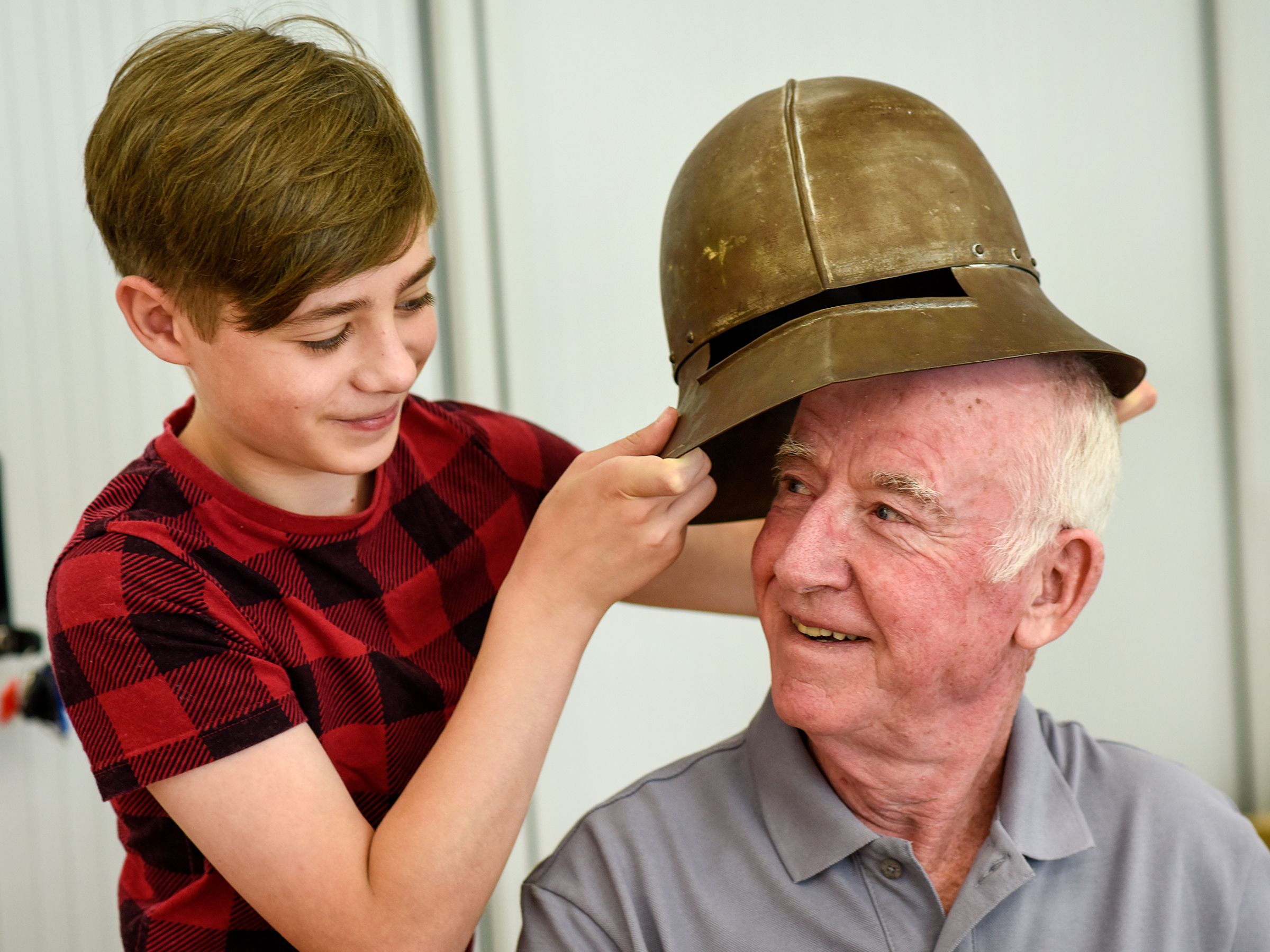

We would like a series of seven activities in total: six activities aimed at six different priority demographics (one activity per demographic) and one generic drop-in activity, which can be delivered to a mixed and unspecified audience, such as people visiting a market, library or outdoor event. These activities will be delivered by our museum staff to multiple groups within that demographic. These demographics are:

• Families with children under the age of 5

• Primary Schools (pupils and teachers)

• Young people (14-25 years old)

• Polish people

• Older people (over the age of 55)

• Wakefield Council employees

The activities should be designed, planned out and communicated in a way that our staff can easily pick up and deliver to groups.

Outputs:

❖ A timed consultation plan, with details of who, when and how we will consult with our priority groups. The plan should contain detailed plans of each consultation activity (in a lesson-plan style) and the resources needed to deliver them.

❖ A method for recording the data and feedback we acquire, so that it is understandable and usable.

The fee for this work is £3500. 

Deadline for Expressions of Interest is Monday 25 April, 9am. 


For a copy of the full brief, or for more information, please contact Leah Mellors, Collections & Exhibitions Manager on lmellors@wakefield.gov.uk


Friday, March 11, 2022

Wakefield Museums & Castles shortlisted for 'museums Oscar!'

We are thrilled and proud to have been shortlisted for the Museums + Heritage Sustainable Project of the Year Award 2022, for our project, A World of Good.


Known as the ‘Oscars of the museums world’, the Museums + Heritage Awards celebrate the very best in the world of museums, galleries, cultural and heritage visitor attractions. Hundreds of entrants from around the world will battle it out to win one of seventeen prestigious awards. The Sustainable Project of the Year award is sponsored by the National Lottery Heritage Fund, and celebrates outstanding environmentally sustainable projects or exhibitions, which can demonstrate best practice in approaches to managing environmental impacts.


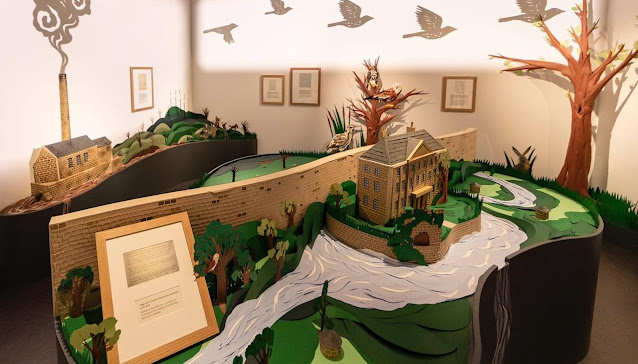
Wakefield Museums & Castles have been shortlisted for A World of Good, a project designed to inspire positive action on the climate crisis. At the centre of the project is the immersive, multi-sensory A World of Good exhibition at Wakefield Museum, which uses sculpture, animation and sound to bring the work of 19th-century environmentalist Charles Waterton to life. It asks visitors to sign up to an environmental manifesto and make a pledge to take real and meaningful action on the climate crisis.


Our Do A World of Good pledges are simple and practical ways you can make a difference.


Alongside the exhibition, we have produced educational resources for schools and communities, a social media campaign, and events and workshops designed to inspire and motivate you to make a change. Our team have also written an action plan to reduce the carbon footprint of our museums and castles.

“It is great to see the Museums & Castles team being acknowledged for this project, which addresses one of the most urgent contemporary issues we face. Museums play a vital role in engaging and educating people about the world around us and A World of Good is a perfect example of that.”

Councillor Michael Graham, Cabinet Member for Culture, Leisure & Sport for Wakefield Council


The winner of the Museums + Heritage Awards will be announced at the Museums + Heritage Show on 11 May 2022.


You can visit the A World of Good exhibition at Wakefield Museum until July 2022, or find out more about the project on our A World of Good pages on this blog.

Follow @WFMuseums #AWorldOfGood and #DoAWorldOfGood on Twitter for more content and join in the conversation on the hashtags - we'd love to hear how you are Doing A World of Good in your home, garden, work or lifestyle. 

Find out more about the awards and all the amazing shortlisted projects on the Museums + Heritage Awards website.


Tuesday, November 23, 2021

We’re recruiting! Could you be our new Digital Audience Development Officer?

Are you passionate about culture and heritage?
Can you develop and deliver engaging stories using museum objects?
Would you like to create memorable digital experiences for all ages?

 
If so, then this job may be for you.


We are looking for a dynamic individual to develop, embed and expand our newly developed digital strategy and action plan within the operations of Wakefield Museums and Castles. You will be working across teams within the service. The role will see you taking the lead on implementing the strategy and action plan across the team and integrating digital into the ethos of the service.
 

We would welcome applications from people with proven experience in managing, producing, organising, delivering and evaluating digital engagement content. The role will require you to research and create new and innovative ways of increasing access, and developing engagement opportunities that showcase our sites and collections.


This role is essential to our vision of providing a representative, accessible and community-driven museum service, which engages and connects people of all ages with the varied and fascinating heritage of the Wakefield district.


Please see Jobs at Wakefield Council for the full job profile and person specification. 


The closing date for applications is Friday 14th January 2022.

Interviews will be held in February 2022.

Should you wish to discuss this post, please contact Louise Bragan, Senior Officer: Programming and Learning 


Friday, October 8, 2021

Our Museums Change Lives!

Wakefield Museums & Castles have been shortlisted for the Museums Association's Museums Change Lives Best Project Award 2021, for our project A World of Good.

The Museums Change Lives awards are awarded by the Museums Association, the sector body for museums in the UK, to recognise and celebrate outstanding practice by UK museums delivering social impact. They promote the best examples of work by museums and individuals that support communities and engage with contemporary issues. Previous winners of the award include National Museums Northern Ireland and the Jewish Museum London.

We have been shortlisted for the Best Project award for A World of Good, a project designed to inspire positive action on the climate crisis. At the centre of the project is the A World of Good exhibition at Wakefield Museum, which uses sculpture, animation and sound to bring the work of 19th-century environmentalist Charles Waterton to life. It asks visitors to sign up to an environmental manifesto and make a pledge to take real and meaningful action on the climate crisis.

Gallery view of A World of Good exhibition at Wakefield Museum

Alongside the exhibition, we have produced educational resources for schools and communities, a social media campaign, and events and workshops designed to inspire and motivate you to make a change. We have also written our own action plan to reduce the carbon footprint of our museums and castles.

Councillor Michael Graham, Cabinet Member for Culture, Leisure & Sport for Wakefield Council, said “It is great to see the Museums & Castles team being acknowledged for this project, which addresses one of the most urgent contemporary issues we face. Museums play a vital role in engaging and educating people about the world around us and A World of Good is a perfect example of that.”

The winner of the Museums Change Lives award will be announced at the Museums Association annual conference on 8 November 2021 and we'll share the news on our Twitter account.

You can visit the A World of Good exhibition at Wakefield Museum until July 2022, or find out more about the project here

Monday, September 27, 2021

Cleaning up history

We're very lucky to have lots of brilliant volunteers help us with our projects. In this special post, Kylie tells us about her recent experience as a conservation volunteer and explores one object she found especially interesting during her time with us.


This summer preparations began for the Wakefield Museums & Castles partial store move, which meant dusting and packing objects that are not currently on display at any of the museum locations. Together as volunteers, under supervision, we were able to help review shelves of objects so that their documentation would be up to date and their condition for moving would be improved.

Objects kept at the store will typically have significance to Wakefield and the surrounding area. There were many interesting objects for us to clean. For example, typewriters could have dust settle under the keys whilst on open shelves. Using brushes, microfibre cloths, smoke sponges, or museum vacuums, they were returned to a clean state. These dry-cleaning methods will not always cause drastic changes in appearance, but it is still satisfying to know objects are cleaner and protected from damage by dust.

Old typewriters on the shelves in the Museum Store
Some of the typewriters before we dry cleaned and repacked them.

An object of particular interest was a black case of entomology equipment, used to study insects. The donor information named Walter Fletcher as the former owner, which is corroborated by the ‘WF’ scratched into a magnifying lens in the kit. Unfortunately, not much else is recorded about him, but it is clear he had a passion for entomology and took time to curate the required supplies over a long period of time. 

Walter Fletcher's entomology kit, a black wooden case, around the size of a laptop
Walter Fletcher's entomology kit

Inside there were 44 small empty boxes, some made of metal but most were paper. The majority also had labels for tablets from chemists. The size of these must have been perfect for storing insects. Discerning the exact date of the supplies and owner is difficult, but the labels of the various pill boxes  inside the case suggest it is from 1935-1968 due to the company name, Timothy Whites & Taylors. There are no objects made of plastic in the box, which may suggest earlier than the 1960s.  

The repurposed pill boxes are small circular boxes, made out of cardboard. They are originally from Timothy Whites & Taylors Dispensing Chemists, from 66 Kirkgate, Wakefield.
Pill boxes from local chemists seem to have been repurposed to store insect specimens.

There were also wooden blocks with string wound around them that would have been used to hold insects in place while drying them. There were metal tools, scalpel blades and packages of pins to assist in this process. A large net that could be dissembled was also able to fit in one compartment of the case. Everything needed for this hobby or passion to be fulfilled.

There was care to detail in so much of what Fletcher kept. He had nine glass slides with different insects, each carefully labelled.


Some of Fletcher's insect specimens in handmade specimen cards. These are all small types of fly.

In conserving this case, all objects were removed and the interior cleaned by brushes and a museum vacuum. Some objects required wrapping in acid free tissue, which will help stop any reactions between materials. This included the metal boxes because they react to relative humidity more than other organic materials like paper. Objects that were loose, like two large feathers, were also wrapped in tissue. Other objects were put into zip sealed plastic bags. This included loose pins and other sharp hazards. The goal is that all the different parts of the kit would stay together if the case was moved and it would be unlikely for damage to occur.

There are many more interesting objects to be found in the store. Dry cleaning and improving packaging for storage is helpful so that the objects will remain conserved for study or display in the future.


Special thanks to Kylie and all our conservation volunteers for their help preparing objects for the move. To keep up to date with this project and see what other treasures we discover, follow us on social media. Look out for updates on the hashtag #WFWhatsInStore.


Thursday, September 9, 2021

Collections on the Move

At Wakefield Museums & Castles, we hold over 110,000 objects, which tell the story of our district from prehistory to modern day. As with most museums, we only have space to display a small proportion of these objects in our museums – the rest are carefully looked after in our museum store. You can go behind the scenes at the museum store here.

A photo of several of the Museum Store tall shelves full of interesting objects
Racking in the store, with furniture and larger social history objects

In the autumn and winter of 2021, we will carry out a partial move of our stored collections. We need to move around half of our collections to a new building. Thankfully, this new building is on the same site as our existing store, so we don’t have far to move. However, it’s vital that we protect our objects during the move, so that nothing gets damaged.

Shelves full of boxed objects
Racking in the store, with boxed objects

To protect our objects, we are currently re-packing them, using conservation-grade materials such as acid-free tissue paper. This involves making lots of tissue puffs and tissue sausages, which we can use to pad out the box, making sure that the objects don’t move around when the box is lifted or carried. This also prevents the objects from touching or rubbing against one another, which can cause damage.

A repacked box with two glass objects inside, wrapped in acid-free tissue
A re-packed box, containing glass bottles

Larger objects need to be wrapped in acid-free tissue paper and bubble wrap, or secured in crates for moving. We’re also taking the opportunity to give everything a good clean. Conservation students Kylie and Zoe, from Lincoln University, have been helping us to clean our objects, using conservation cleaning methods.

All of this work takes a lot of time and effort. Our Collections team are working on this project almost full-time and we also have five amazing volunteers who are supporting us. 

It is our responsibility to care for our collections so that generations of people can enjoy, learn from, and be inspired by their heritage. Please bear with us while we work on this important project and stay tuned for more updates.  

Wednesday, August 18, 2021

On this day in history: telling the fascinating story of our medieval castles

Over the last few years, a group of volunteers at Pontefract Castle has been publishing ‘On this day in history’ articles for the castle’s Facebook page. In this special guest post, they explain how the project came about and introduce their exciting new website.


By Kevin Wilson and Alan Archer


This project developed out of a desire to bring the fascinating histories of both Pontefract and Sandal Castles to a much wider audience. The 'on this day' Facebook articles were tremendously well received, with at times more than 10,000 hits for any particular post. A good example of one of the most popular posts was in relation to the death of Thomas, Earl of Lancaster:


“Following the defeat of Thomas, Earl of Lancaster, lord of Pontefract, and his supporters at the Battle of Boroughbridge on March 16th 1322, Thomas was tried and condemned in the Great Hall at Pontefract Castle. He was denied the opportunity to speak in his defence and was sentenced to be hanged, drawn and quartered. The sentence was commuted to beheading because Thomas was the king’s cousin and, it is rumoured, due to the intercession of Queen Isabella. He was taken on a mule to St Thomas’ Hill - as it has since been known - and executed on the 22nd March 1322 in sight of his castle and whilst facing Scotland (symbolic of his alleged treasonable correspondence with the Scots.) ...”

An artist's interpretation of the Earl of Lancaster being led to his execution. He is riding a horse.
Thomas, Earl of Lancaster being led to his execution
James William Edmund Doyle, Public domain, via Wikimedia Commons
https://upload.wikimedia.org/wikipedia/commons/b/b7/A_Chronicle_of_England_-_Page_287_-_The_Earl_of_Lancaster_Led_to_Execution.jpg


Similar interest has been shown in the history of Sandal Castle, with one of the most popular entries relating to the Battle of Wakefield on 30th December 1460:

“On 30th December 1460, the Battle of Wakefield was fought on the plain ground between Sandal Castle and the town of Wakefield i.e. to the north of Sandal Castle. This battle has often been overlooked in history mainly due to its short duration (one to two hours) and the number of combatants (about 30,000) when compared against some of the great battles of the era at St Albans, Towton, and Barnet. However, this battle changed the course of English history as the Yorkists were routed, losing 2,500 men. Richard, Duke of York himself was killed and his head subsequently displayed on Micklegate Bar in York …”
The Richard, Duke of York memorial, a small stone decorated column
Richard, Duke of York memorial on Manygates Lane, Wakefield
SMJ / Richard of York Memorial
https://upload.wikimedia.org/wikipedia/commons/0/0a/Richard_of_York_Memorial_-_geograph.org.uk_-_858000.jpg


As a result of the interest shown in these articles, it was clear there was a real thirst for knowledge about the history of Pontefract’s royal castle and its neighbour, Sandal. In seeking to build upon this interest and provide a permanent and repeating record of historical events at both Pontefract and Sandal Castles, we developed www.pontefractsandalcastles.org.uk, which aims to tell a day-by-day history of both castles through the centuries. The entries on this site have been thoroughly researched through the reading of historical books and texts, articles, ancient chronicles, websites and the contributions of published historians.


What remains of the keep at Pontefract Castle
The Keep, Pontefract Castle

Pontefract Castle was originally built in 1070 by the de Lacy family, who had journeyed to England with William the Conqueror. The castle was first built of timber but over time a stone fortress was constructed and added to.

The first castle at Sandal started to be built in 1107 at Lowe Hill by the de Warenne family, who also arrived with the Norman Conquest. In the early 13th century, a more defensible castle was built at the site we see today. The castle had a compact but very secure design.

What remains of Sandal Castle, illuminated by a spectacular sunset
Sandal Castle


The histories of the two castles are inextricably linked. Their story is the story of medieval England: from their initial development as motte and bailey castles built on lands granted to Norman barons who had supported William of Normandy in his conquest of England, through Magna Carta, the local and baronial wars of Thomas of Lancaster, the Wars of the Roses, the English Civil Wars, and the castles' destruction in its immediate aftermath. 

However, this is a story that has often been overlooked, and through the new website, we hope to bring the histories of these two great castles to a wholly new audience. With Pontefract being the ‘Key to the North’ and Sandal being the site of the death of the ‘heir’ to the throne, Richard Duke of York, as well as the site of Richard III’s ‘Council of the North’, this is a fascinating narrative that deserves to be more widely known.

We actively encourage feedback and contributions to our website through the ‘Contact Us’ button on the right of the front page of the website. 


A big thank you to Kevin and Alan and the fantastic volunteer researchers team for this guest post and all their work on Facebook. We wish them the best of luck with the new website.

To find out more about Sandal Castle's history and recent improvements to the site, including brand new interpretation, check out Sandal Castle: from noble beginnings to picturesque ruins