Showing posts sorted by date for query sykes. Sort by relevance Show all posts

Thursday, August 14, 2025

Chloe: what I did on my work placement with Wakefield Museums and Castles

Chloe recently did a work placement with us as part of her university course. She's kindly written this guest blog about her experience. 

Read on to discover some of the interesting objects she catalogued for us!

During my work placement I was based in the museum store. I catalogued a small collection of items from the Sykes / Slazenger factory. The Sykes / Slazenger factory is mainly known for manufacturing sports items and equipment.

When I first started my work placement I was given a tour of the museum store. I was shown some of the objects and items they have and told about their significance. I was then shown the objects I would cataloguing throughout the eight weeks of my placement. I was also shown the history file. This contains everything needed to be kept with the collection, like the forms to say what needs to be catalogued or just used for reference. It also says how they got the items as well as the ownership of the items.

A table featuring a pile of photographs, photo album, racket head press, tennis racket and rifle furniture
The objects I catalogued

The items I was to catalogue were:

  • a pile of black and white photographs

  • a photo album with more black and white photographs

  • a head press (this was used to help make sure the tennis racket kept its shape)

  • a tennis racket with a head press

  • some rifle furniture (the wooden parts of a rifle) produced in the Sykes / Slazenger factory during the Second World War

The photographs

After looking through the objects, I decided I would start by cataloguing the black and white photographs. I started by putting the photographs into groups. I wanted to keep and catalogue the ones that were similar together.

A lot of the photographs were quite similar in nature. Cataloguing them was difficult, as it was hard to tell the difference between them.

Some of the photographs were pictures of some of the different manufacturing processes. These included how a tennis racket or a golf club was made. Others were of people using the machine, or just of the machines themselves.

This was very similar when I had catalogued the photo album. Some of the photographs were similar or the same to the ones I had already catalogued.

A man in an overcoat closely studying a golf club in the Sykes factory
 This photograph shows a man looking over a finished golf club. He is making sure that everything has been done correctly. He is also putting on the final touches to the golf club.

Cataloguing the 3D objects

Cataloguing the rifle parts, tennis racket, head presses and the film reel was different. These objects have depth, whereas the photographs do not.

When measuring the length of the objects, I had to use a tape measure. They were quite long and it would have been difficult to do so without. I also had to look closely at the objects to make sure the condition they were in was fine. 

I was also looking to see if there was anything that was engraved or marked on to the objects.

A vintage wooden racket with a head press attached
The racket, still in its head press

The Sykes factory started to manufacture the wooden rifle parts during the Second World War. They would have slowed down the manufacturing of the sports items they produced, along with some of the machines in the photographs.

Various parts to construct a rifle made out of smooth polished wood
Pieces of wooden rifle furniture made by Sykes

There were some books amongst the items within the collection I was able to use for referencing. This was useful as I was able to match the photographs to the pictures of the machines within the books. 

There were some small pieces of paper that also had the name and description of what the machine was used for and how it worked. I was able to match the pieces of paper to the photographs as some of the machines had their names engraved on the front.

A book titled Sykes and the War and a printed thesis
'Sykes and the War' and a thesis I used to research the objects

I had lastly catalogued some letters within the collection. They were in correspondence with the Sykes / Slazenger factory (more importantly the people within the factory). The majority of them had the dates in which they were sent. This made it easier for me to catalogue them in time order.

A lot of the letters were in response to Briggs receiving the British Empire Medal that was awarded by the King. This was due to his hard work in the war effort. Briggs sent letters back saying that it was a joint effort with the people he was working with and only done with the support of others.

This small collection I have catalogued is a part of a bigger collection Wakefield Museums and Castles has. There is loads more to find out about other sports items and equipment that were made at the factory. There's also lots to learn about the history behind the factory and how they stepped in to help with the war effort.

Thursday, October 31, 2024

Lighting up Wakefield: guide to The Timekeepers by Illuminos

This year's Light Up Wakefield (part of Our Year - Wakefield District 2024) invites you to see spectacular digital installations and experience the city in a whole new light!

One of the 2024 installations is The Timekeepers by Illuminos, which will be projected onto County Hall. 

It is a projection mapping piece based on the 300-year old story of Wakefield-born genius John Harrison. Harrison set his mind to the great mystery of the age – the perfect measurement of time and space. 

The Timekeepers celebrates the great variety of heritage, culture and arts that can be discovered across the Wakefield district.

The installation flies through time and tells stories, large and small from the Wakefield district. 

We're extremely excited, as our collections play a big part in telling the story! It sees some of our tiniest objects made gigantic on the beautiful facade of County Hall.

So what objects can you expect to see in The Timekeepers? Here's a guide to some of the highlights - some you might be familiar with, and others you might not!

The Waterton Clock, 1670s

An ornate lantern clock from the seventeenth century, about 40 centimetres tall, featuring silver nature designs, a domed top, and a swinging pendulum

This is a gorgeous lantern clock which was owned by the Waterton family for generations. 

Charles Waterton (1782 - 1865) of Walton Hall thought that the clock was once owned by Sir Thomas More (1478 - 1535). Waterton believed he was a descendant of More. 

More was Lord High Chancellor to Henry VIII - until he had him executed!

However, the clock was actually made over 100 years after the death of More. Nevertheless, it is a beautiful piece and lends itself brilliantly to The Timekeepers! It's also the oldest clock in our collection.

The 'Castleford Pig', around 1910

A tiny black wooden carved pig, with a looking glass in its belly containing tiny replications of photos of Castleford

The 'Castleford Pig' is literally a window through time! 

Inside this tiny carving of a pig is a looking glass. When you hold the object up to the light, you can see six pictures of Castleford from the early 1900s. 

It's an example of a Stanhope picture viewer, and novelty versions were very collectable. They came in many shapes and sizes, and could feature lots of pictures.

The Timekeepers is about incredible, huge visuals projected onto one of Wakefield's most spectacular buildings. 

So it's absolutely delighted us that our tiny pig, which is only about the size of a £1 coin, is going to be the size of County Hall! 

Glassware made by Bagley and Co Ltd in Knottingley, 1930s

A bright yellow glass vase with four handles and four little koalas on the handles
Although originally started as a bottle factory, Bagley's also made decorative glass. It became especially known for its vibrantly coloured glass developed in the 1930s.

However, there's a hazardous reason behind some of these brilliant colours - some were created using uranium, a radioactive element!

Coloured glass production ended in the 1940s when uranium was needed for atomic bomb development in the Second World War.

After the war, Bagley's went on to create a very dark black glass, known as 'jetique'. 

The eyepopping colours of Bagley's glassware makes it perfect to be projected in The Timekeepers. 

If you'd like to see more, there's a whole Glass Room at Pontefract Museum (don't worry, these ones aren't radioactive!) 

Yorkshire Forced Rhubarb

Inside of a forced rhubarb shed, a dark room with lots of stalks of bright pink rhubarb reaching to the sky

A celebration of Wakefield's heritage wouldn't be complete without rhubarb!

Thanks to good soil mixed with lots of ashes, horse manure and textile waste, and just the right amount of rain, Wakefield specialises in 'forced rhubarb'. The city forms part of the 'Rhubarb Triangle' with Leeds and Morley.

There's a display about the history of growing rhubarb at Wakefield Museum, where you can even hear it growing. The sound might surprise you!

You can also find out more about why Wakefield roots for rhubarb in this blog post.

Phenakistiscope discs, 1880s

A circular wooden phenakistiscope disc with illustrations of a horse and rider on the outer ring, and a jumping dog on the inner ring

They might be a bit of a mouthful to pronounce, but phenakistiscope discs are actually an early type of animation.

They were invented in the early 1800s, long before film or even photography as we know it. 

Our collection of phenakistiscope discs, including this one pictured, belonged to the Farrers. The Farrers were a famous clock-making family from Pontefract. Hence the link to The Timekeepers

The Illuminos team bring these discs to life through digitally replicating their analogue animation.

Playmakers - Sykes and Slazenger

A blue quiver with a leather strap, containing wooden arrows with coloured feathers
A Slazenger quiver of arrows, 1950s

Wakefield has quite the sporting heritage! Our Playmakers collection tells the story of how, for more than a century, Horbury was a centre of sporting excellence and innovation.

The factory at Horbury was first founded by William Sykes, and then became Slazengers during the Second World War.

Horbury-made sporting equipment supplied the World Cup, Challenge Cup, and was endorsed by sports stars including Steffi Graf and Don Bradman.


Commemorative marbles from A Reight Neet Aht, 1930s to 1950s 

A large glass marble with 'Castleford, Reight neet aht, April 21 1936' painted on it

Prepare yourself for a torrent of marbles to cascade down County Hall! And no, it's not just because we've lost ours... 

A game of marbles was a big deal in Castleford! From 1936 an unlikely and flamboyant charity event called 'A Reight Neet Aht' created a buzz at the Castleford Co-Operative Hall. 

Known as 'taws', these marbles contests raised money for Leeds Infirmary over the next 20 years.

The marbles for the tournament, along with glass trophies, were made in and around Castleford. They all look mighty impressive projected large in The Timekeepers!

You can don your gladrags for a glamorous game of marbles in A Reight Neet Aht at Castleford Museum.

The Wakefield Pageant, 1933

A photograph of a long chain of girls in matching outfits, with the girls on the outer sides of the 'train' carrying wheels, and a torch at the front
A group of girls from Thornes House Secondary School and Ings Road Central School acted as a 'ballet' steam train in the 1933 Wakefield Pageant!

The Pageant of Wakefield and the West Riding took place in June 1933 in Thornes Park, Wakefield. It celebrated Wakefield's past and present, and imagined the city's future.

A whole cast of schools and societies took part, each playing different roles from Wakefield's proud history. They also helped to make the costumes and lavish backdrops.

More than 2,000 performers took part in the Pageant over 10 performances. Thousands of people turned out to enjoy the spectacle.

Objects and photographs from the 1933 Pageant are projected alongside The Hatchling in The Timekeepers. The Hatchling was an amazing event during the summer of Our Year - Wakefield District 2024, which saw a dragon hatch in Wakefield.

The Wakefield Pageant was very much the 'Our Year' of 1933!

You can see a special art display inspired by the Wakefield Pageant by artist Louise Goult in the lower atrium of Wakefield One.

Anglo-Saxon cross, around 900 to 1000 AD

The remains of a decorated Anglo-Saxon cross shaft, topped and tailed by reconstructions of what the rest of the originally brightly painted cross might have looked like

This stone cross is the first evidence of a settlement in modern Wakefield. 

The cross was probably used for preaching, and it stood in Wakefield's marketplace until 1546. It then disappeared until 1861, when Edmund Waterton (son of Charles Waterton) rescued it from the demlotion of an old butcher's shop. The cross shaft had been used as a doorstep to the butcher's!

Not only is this object important in telling us about the creation of Wakefield, it was once a vibrant and colourful creation. 

The cross is on display at Wakefield Museum - it is on loan courtesy of York Museums Trust.

Monday, September 30, 2024

Sporting Heritage Day 2024: A Reight Yorkshire Affair

Every year, September 30 is National Sporting Heritage Day. The Wakefield district has a wealth of sporting heritage! 

While the likes of Rugby League, Sykes and Slazenger are pretty well known, here we're shining a light on two of our region's more unusual sporting events.

They feature in our latest displays at Castleford Museum and the new Ossett Library Museum Hub - and have suitably Yorkshire names!

Ah’ll race thee!

We're celebrating the World Coal Carrying Championships in the newly refurbished and reopened Ossett Library in Ossett Town Hall.

 
A tall display case containing a mannequin wearing World Coal Carrying Championship competitor's clothing and carrying a bag of coal, and surrounded by memorabilia. There is also a screen playing a video and some leaflets.
The 'Ah'll race thee!' display at Ossett Library

Every Easter Monday the village of Gawthorpe comes together to stage the World Coal Carrying championships.

What could be more Yorkshire than running up a steep hill with a heavy bag of coal on your back after making a bet in a pub?

That pub bet in the 1960s has turned into a Guiness World Record annual sporting event!

The main adult race is a gruelling challenge. Contestants carry a bag of coal from the Royal Oak pub on Owl Lane in Ossett to the Maypole Green in Gawthorpe. 

The route covers 1012 metres. Men carry 50 kilograms of coal and women carry 20 kilograms. Each year a pigeon clock records the official race times.

The race is much more than a sports competition. Athletes take part for lots of different reasons. They run for charity, personal improvement, or on behalf of a loved one who no longer can.

David Jones’ Guinness World Record time of four minutes and six seconds was set in 1995 and still stands today!

See what happened in the 2022 event, the first after the COVID-19 lockdowns, in our video:


A Reight Neet Aht! at Castleford Museum

Between 1936 and 1957 Castleford held a star-studded sporting event.

Since 1932 the game of marbles has been officially classified as a sport. Local journalist Sid Colclough got the community together to host an annual marbles (or taws) tournament each year as a charity event.

The event was the talk of Yorkshire. The cinema and music hall star, Gracie Fields was a patron. In 1940, the star guest was entertainer, George Formby. 

In 1955 Chairman of the Daimler motorcar company, Sir Bernard and Lady Docker, attended the event, arriving in a golden car. They played marbles, resting their knees on golden cushions. Lady Docker became Women’s world taws champion, and they donated £1000 towards cancer relief.

Find out more about the fabulous 1955 event in this video:


In 1956 the event was given a ‘zebra’ theme, some marbles even had zebra stripes. Even cars arrived reupholstered with zebra skins!

Explore more about A Reight Neet Aht in our dedicated blog, or visit the new display and get your gladrags on at Castleford Museum.

The Reight Neet Aht display, with a display case containing trophies, marbles and memorabilia from the event, an information panel, a basket with dressing up clothes and a mirror
The 'Reight Neet Aht' display at Castleford Museum


Wednesday, May 29, 2024

D-Day 80 Display

Malcom Patterson, Chairman of the Horbury, Sitlington and Ossett branch of the Royal British Legion, contacted us to ask if we could help with a special display to commemorate the 80th anniversary of D-Day. 

The display, featuring objects loaned by Gavin Cave, will be in the shop window of Grooms Rooms Menswear in Horbury from 1 to 17 June 2024.

A soldier's uniform and a dispatch rider's uniform from the D-Day landings on display on mannequins, with a wreath of poppies and a note commemorating the names of those who died in the Second World War by the Horbury Sitlington and Ossett Royal British Legion
The D-Day display in Grooms Rooms Menswear

D-Day display

D-Day was on June 6, 1944. It involved the simultaneous landing of tens of thousands of troops on five separate beaches in Normandy. 

It was the largest military naval, air and land operation ever attempted. It marked the start of the campaign to liberate Nazi-occupied north-west Europe.

Local collector, Gavin Cave, has worked with the Wakefield Museums and Castles team to create a display of some of his collection. 

This includes the uniform of a ‘typical’ British soldier and sailor landing on the Normandy beaches on D-Day, and the uniform of a dispatch rider. Dispatch riders were one of the many specialist troops involved in supporting the landings.

Gavin has said that he’s really enjoyed the opportunity to display some of his collection, though some of it has been a bit of a project to get it ready for display!

The D-Day uniforms 

The uniforms are all original, possibly unissued items.

The 'typical’ uniform includes a MkII steel helmet, which has a net attached to afford camouflage and concealment. The steel dispatch rider helmet is designed to also give protection whilst riding a motorcycle.

Gavin holding up a helmet in each hand. He is looking towards the dispatch rider helmet, which is a dome-shaped khaki helmet with leather straps hanging down over the ears. The 'typical' helmet on the right is a similar shape but a darker khaki, with a net attached.
Gavin holding the two helmets - the dispatch rider helmet is on the left, and the 'typical' one on the right.

The clothing is different too. 

The ‘typical’ soldier and sailor wears a woollen battledress jacket (late 1940 austerity pattern) and battledress trousers (1939 pattern). The trousers are much higher waisted than modern trousers, in keeping with the fashion of the day. They also had the added advantage of keeping the lower back warm! 

He also wears 1937 pattern webbing. This has two ammo pouches at the front, large enough to take the magazines for a Bren gun.

The brown woollen shirt and battledress trousers worn by a 'typical' soldier on D-Day, with multiple pockets, and accompanying boots
The 'typical' soldier / sailor uniform, ready for display

He carries a water bottle, entrenching tool and his small pack. This would contain his 24-hour rations. He also had a waterproof cape, jumper, mug, mess tins and spare socks. On his feet he wears regulation ammunition boots.

The dispatch rider wears a rubberised coat over his battledress jacket. The coat straps over the legs of his jodhpur-like trousers, allowing for easy riding.


A long brown rubberised overcoat, partially opened to show the brown jodphur-like trousers designed to provide comfort when riding a motorbike
The dispatch rider's uniform, with coat opened to show the jodphur-like trousers

A pair of dispatch rider boots (bought and worn by Gavin's wife in the ‘90s!) were in particularly poor condition. They have been painstakingly restored to prevent further deterioration of the leather. Many layers of polish had to be removed, so that the leather could be conditioned and consolidated.


Leather boots that reach up to the mid calf, with buckles and laces up to the top.
The dispatch rider boots, now restored

June 6, 1944 – A Big Day (for other reasons!)

Irene Winifred Cheshire was born in Horbury in 1924. During the Second World War, she was a ‘Private’ (cook) in the Auxiliary Territorial Service (A.T.S.), stationed at Pontefract barracks.

Here she met Harry Patterson. Harry was born in Co. Durham in 1914. He had joined The Green Howards before switching to become a ‘Private’ (cook) in the Army Catering Corps (A.C.C.) on its formation. He was then sent to Pontefract.

Harry and Irene were granted Special Leave to get married on June 6, 1944. The wedding took place at St. Peter & St. Leonards church in Horbury.

Harry, in uniform, and Irene, in a white wedding dress with veil, with their family on their wedding day


Operation Neptune (the D-Day landings) was top secret. The couple will have been unaware that their wedding was to be on the same day as the largest military naval, air and land operation ever attempted!

Horbury’s role in WW2

Many British manufacturers switched to producing equipment to help the war effort. This included Sykes of Horbury, the famous local sports manufacturers. 

By the Second World War, Sykes employed a thousand local people. As they had in the First World War, the Sykes workers produced an array of equipment for the Second World War. 

A group of Sykes workers, all women, making wooden rifle furniture. One is holding her piece up and looking down it to check its quality.
Workers making rifle furniture at Sykes' Albion Mill in the Second World War

These ranged from bayonets and ammunition boxes to sand goggles and snow shoes - made using the same techniques as their tennis rackets!

A wooden oval-shaped snow shoe, with rope attached to a piece of fabric where the foot would be, and straps across the top.
A Sykes' Second World War snow shoe, made using their steam bending tennis racket technique.


Other local people were also involved in the war effort leading up to the D-Day landings. 

With thanks to the Royal British Legion for their support with this display.

Royal British Legion logo

Monday, January 22, 2024

100 Years of Collecting - new display with Wakefield Historical Society and Wakefield Civic Society (part 1)

2023 marked both 100 years since Wakefield Museum first opened, and the start of a century of collecting objects! 

To celebrate, our team picked 100 objects that tell the rich heritage of our district

Most of them are already on display, so we asked our friends at Wakefield Civic Society and Wakefield Historical Society to pick a selection from our storeroom.

Their members have picked an interesting mix of objects. These cover work and industry, sports and leisure, entertainment and creativity, politics and protest, and law and order.

The objects are now on display in the 100 Years of Collecting case at Wakefield One. 

Members of Wakefield Historical Society and Wakefield Civic Society, and curator John Whitaker, looking into the display case and discussing its contents
Members of Wakefield Historical Society and Wakefield Civic Society at the display's unveiling, with curator John Whitaker

This blog features the objects chosen by the Wakefield Historical Society, along with the captions they wrote. The Wakefield Civic Society captions are in this blog.

All of the full captions are available in the 100 Years of Collecting Online Exhibition (choose 'Objects on Display' and then 'Wakefield One'). 

Dress from the Wakefield Pageant, 1933

Written by Deborah Scriven, member of the Wakefield Historical Society
An ornate green and gold pageant dress in an Elizabethan style, with a wide boned frame and cap

Historical pageants were popular in the 1920s and 1930s. 
Not to be outdone, Wakefield staged its own in 1933. 

Mrs Mabel Crook wore this costume as one of Queen Elizabeth I’s ladies-in-waiting during the scene in which the Queen granted a charter to Wakefield for a free grammar school.

After more than four centuries, the school continues to flourish. The dress is a fascinating link between two very different periods in the city’s history.

Queen Elizabeth I and her ladies-in-waiting at the 1933 Wakefield Pageant. They are all in elaborate Elizabethan costumes, including the one in our collection.
Photograph courtesy of the Wakefield Express.

Mabel Crook (seated at the bottom left) as one of Queen Elizabeth I’s ladies-in-waiting wearing the dress. This photograph is from a series taken by the Wakefield Express showing the 1933 Wakefield Pageant.

'Snooker for Women' campaign t-shirt, 1970s-80s

Written by Olivia Rowley, council member of the Wakefield Historical Society

White women's fit t-shirt with 'Snooker for Women' and illustration of two snooker balls headed for the pocket on it

I have to choose the snooker campaign t-shirt, being involved in the campaign. It was an exciting time.

Sheila Capstick innocently joined her Dad to play snooker one afternoon at the City Working Men’s Club in Kirkgate.

The local committee, the Club and Institute Union determined that women couldn’t play snooker.

The t-shirt symbolizes the power that certain males own.

Although so many women now participate in all sorts of sports, the sexism hasn’t ended!

The struggles of so many women throughout history must not be forgotten.

Olivia at a Snooker for Women demonstration, with her baby daughter in a pram. Other people around her are wearing the iconic t-shirts and have placards

'Me with our pram containing our now 44-year-old daughter on her first demonstration, but not her last'
Photo courtesy of Olivia Rowley

Lead weight, 1300s - 1400s

Written by Richard Knowles, Vice-President of the Wakefield Historical Society


A small shield-shaped lead weight featuring a fleur de lys motif


A lead merchant weight, known as a Lys and Crown type, weighing 1lb and believed to date from the 14th / 15th century.

Their specific use remains uncertain, but they may be wool weights.

This example is illustrated in J.W. Walker’s ‘Wakefield Its History and People’ 2nd edition (1939). Walker states it was ‘dug up in a garden on the Eastmoor housing estate’.

Walker was also the founding President of the Wakefield Historical Society, established in 1924.

The suggested location of the find site and presence of a fleur-de-lys, may lead one to speculate on a Wakefield connection. This is perhaps understandable as there was, at this time (1930s) a lack of other archaeological examples. However, a number of very similar examples have now been found in North and East Yorkshire.

Drawing of a lead weight very similar to the one in our collection, shield-shaped featuring a fleur de lys design
Illustration of the weight in J.W. Walker's 'Wakefield: Its History and People' (1939 edition)

Weight and height scale from Wakefield's Hornsea Seaside School, 1930s

Written by Pete Taylor, member of the Wakefield Historical Society

Tall, thin weighing scales designed for children. There is a hook sticking out of the scales that weights can be added on to


These were used to monitor children’s health and physical development, a growing concern in the early 20th century.

From 1906 local authorities took steps to record the height, weight and chest measurements of children attending elementary school.

From 1921 they were empowered to provide children with vacation schools. 

Wakefield’s Hornsea Seaside School opened in 1938, operating as a residential elementary school for 24 weeks a year and a holiday camp during the summer break.

Mrs Paterson the matron weighing a young child on the weighing scales. She has a very stern expression as she reads the child's weight.
Weighing in: Mrs Paterson, the matron at the Wakefield Seaside School in Hornsea, weighing a new arrival.
Photo copyright of Hulton Archive / Getty Images.

Dunlop 200G Max Pro tennis racket, 1980s

Written by Jean Broadbent, member of the Wakefield Historical Society

Dunlop 200G Max Pro tennis racket, purple frame with orange handle

William Sykes, a leather worker, started a business making footballs but quickly moved into tennis rackets and other equipment.

After mergers with Slazengers (1942) and Dunlop (1959) they became well known particularly for tennis.

I loved playing and watching tennis but was never fortunate enough to own a Dunlop 200G Max Pro like this one.

It is evidence that this Wakefield company was at the forefront of scientific advances.

Horbury has an interesting history in sport, unusually in equipment rather than participants.

Steffi Graf and Virginia Wade posing with a framed 200G max pro racket, with Dunlop banners behind them

1980s Women’s tennis legend Steffi Graf presenting the millionth injection moulded 200G Max Pro racket to 1977 Wimbledon champion, Virginia Wade.
Photo taken at the factory in Horbury.

The display is at Wakefield One until end of May 2024.


Tuesday, September 26, 2023

Wakefield's Sporting Heritage

When it comes to sporting heritage, Wakefield District has lots to celebrate… even more than you might think!

We've dug out some sporty showpieces from our collection, many of which also feature in our 100 Years of Collecting Online Exhibition.

We are Rugby League

The Wakefield district is often defined by Rugby League. It both unites and divides our communities.

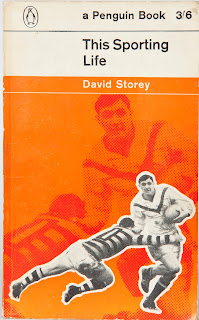
David Storey encapsulates this in his classic 1960 gritty northern novel, This Sporting Life:

Front cover of This Sporting Life, with a rugby player tackling an opponent
Our copy of This Sporting Life, on display at Wakefield Museum

The story follows a Wakefield Trinity player as he navigates his sporting career and his love life. In 1963 a film version starring Richard Harris was released to rave reviews. 

Belle Vue stadium features as a key location in the film and many residents remember being paid to attend as extras in the stands.

Most local people are close followers of one of the big three teams: Wakefield Trinity, Castleford Tigers and Featherstone Rovers. 

We have some fantastic objects telling the stories of the clubs, covering their historic victories and record-breaking achievements.

Iconic objects include this thick woollen jersey worn by Wakefield Trinity’s Harper Oliver Hamshaw way back in the 1880s: 

A thick woollen button-up jersey, navy blue with a red horizontal stripe across the chest and the arms.
Harper Oliver Hamshaw's rugby jersey

This was a time when Trinity shaped the creation of professional rugby league by paying their star player, three-quarter back, Edward ‘Teddy’ Bartram, a salary of £52. This made him the first professional rugby league player.

Professional sport would be nothing without the supporters! 

Telling local fans' stories is just as important as that of the players. This rosette was proudly worn by a Featherstone Rovers supporter when Fev reached the Rugby League Challenge Cup Final in 1974:

A blue and white rosette with 'Featherstone R', 'Wembley' and a picture of the trophy on it
A fan's Featherstone Rovers rosette from the 1974 Rugby League Challenge Cup Final


Local players didn't only capture hearts and minds - they smashed records. 

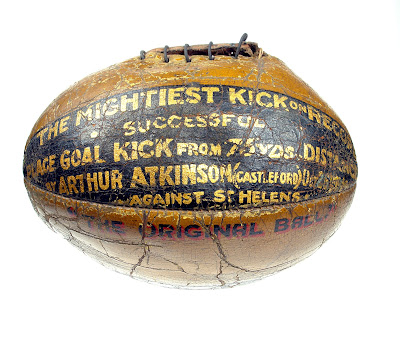
This rugby ball was used by Arthur ‘Brus’ Atkinson to make a record goal kick of 75 yards in Castleford's victory against St. Helens, on 26 October 1929. 

The record still stands 94 years later!

An old hand-stitched rugby ball with the details of Atkinson's achievement written on it
Arthur Atkinson's record-breaking rugby ball


But - it's not just rugby league Wakefield makes waves in!


Super Sharp Shooter: Stephanie Park

Stephanie Park nee Hopley (1940-2012) was a nurse and midwife in Wakefield. After losing a leg following an accident, she took up competitive shooting. Stephanie went on to become the World Disabled Champion in target shooting in 1987 and the winner of the Cardiff Open Shoot in 1989. This was the first sports event in which disabled and non-disabled competitors took part equally. 

She was also a world champion athlete in field sports and archery.

Stephanie in action, aiming her rifle while in her wheelchair. She has short, dark curly hair and is wearing a leather jacket and jeans.
Stephanie in action

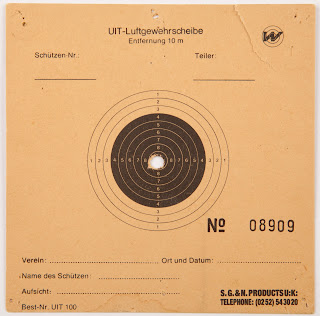
She hit all 10 shots through the central ring of this target shot at the 1989 National Small Bore Rifle Association Championship, and rightfully kept it as a souvenir! It features in our 100 Years of Collecting Online Exhibition:

A square cardboard target shot with all 10 shots through the central ring
Stephanie's keepsake target shot from the 1989 National Small Bore Rifle Association Championship 

Stephanie was also a disability rights campaigner and community leader. Her proud son Daniel kindly donated her archive to our collection in 2014.

Click here to read more about Stephanie's incredible life and career. 


Tour de Force: Barry Hoban

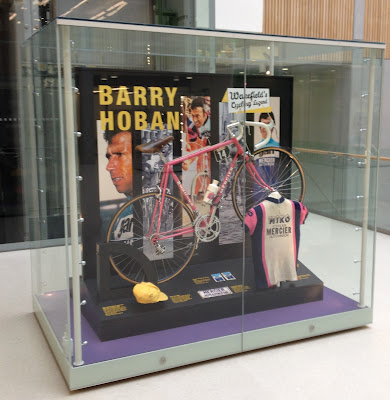
Barry Hoban is a former professional cyclist from Wakefield who rode during the late 1960s and early 1970s. 

He holds the record for the most Tour de Frances completed by a British rider – having finished 11 of the 12 he started between 1965 and 1978. 

He was also the first Briton to win two consecutive stages of the Tour, a feat not matched until 2008!


Square glass display case featuring photos and objects relating to Barry Hoban's career, including a pink road bike and pink, white and blue jersey
A display from 2014 showcasing Barry Hoban, featuring one of his bikes and jerseys

A Supporting Role: Sykes & Slazenger

As well as our sporting stars and top teams, Wakefield District has a very proud heritage of sports manufacturing.

In 1870 a saddler’s apprentice from Horbury founded William Sykes Ltd. Soon he was the chairman of a thriving international business. Sykes produced equipment for a huge variety of sports, from billiards to boxing, crown green bowling to croquet. 

Advertising poster for 'Choose a Sykes Model', with images of the EDB, the Blue Riband, the Ruby and the Alpha rackets, and the taglines 'Senior Service' and 'Simply Splendid - none better'
A vintage Sykes advert from the 1930s

Sykes eventually became part of the Dunlop Slazenger empire, pioneering ground breaking new products and technologies. For more than a century, Horbury was a centre of excellence and innovation in sports production, supplying top competitions like the FA Cup and Challenge Cup.

When Australian legend Don Bradman maintained a test cricket batting average of 99.9 over his career (1928 – 1948), he did so using cricket bats made in Horbury. The Don Bradman endorsed signature cricket bat became a very popular and long running brand of bat for Sykes, and continued after the company merged with Slazenger:

Old wooden cricket bat, engraved with 'Sykes, Don Bradman - Autograph' and Bradman's signature
A Don Bradman signature cricket bat


When England won the World Cup in 1966, they did so kicking a ball made here in Horbury. We've got one of the footballs made for the Final on display at Wakefield Museum:

Bright orange hand-stitched Slazenger Challenge 4-Star football
One of the Slazenger 4-Star Challenge footballs made for the 1966 World Cup

In 1988 German Tennis ace Steffi Graf became the first (and still only) player to win a Golden Grand Slam (she won each of the four Grand Slam tournaments and an Olympic Gold medal all in one year). 

She did so using a tennis racket designed and made in Horbury - The Dunlop 200G Max:

A purple tennis racket with green and brown details and the Dunlop logo
A Dunlop 200G Max racket, the type used by Steffi Graf to win her Golden Slam

So, yes - we're pretty proud of our sporting heritage!

Find out more:

 
Staff Pick - Wakefield Trinity and Me