Showing posts with label women's history. Show all posts

Friday, July 11, 2025

Cynthia Kenny: A city framed - now open at Wakefield Museum

We've opened a new exhibition at Wakefield Museum celebrating the life and work of local artist, Cynthia Kenny (1929-2021)!

The exhibition, Cynthia Kenny: A city framed, is open until June 2026. It explores our changing city through the artist’s eyes.

Three adults sat on outdoors-inspired seating in the centre of the Cynthia Kenny gallery, with landscape and architectural buildings framed against deep blue walls
Photo credit: Nick Singleton

Cynthia Kenny was one of Wakefield’s most important artists. She painted places in Britain and beyond and exhibited around the world. But Wakefield always held a special place in her heart. From the 1960s to 2000s, Kenny documented Wakefield’s changing landscape.

The exhibition features cityscapes, rural scenes, and detailed studies of buildings. Visitors can admire iconic views and well-known landmarks and discover Wakefield’s hidden gems.

As well as producing her own intricate works, she was a founding member of Wakefield Art Club. Kenny was also a trustee for the Friends of Wakefield Art Gallery and Museum for many years.

The artworks are also brought to life by a new soundscape, created by artist Michelle Duxbury. Her recordings from the city to evoke a day in the life of Cynthia’s Wakefield. Duxbury has also recorded creative audio descriptions for several of the exhibition’s star works.

You can also find out more about Kenny’s influence and legacy. Enjoy an exclusive new film by Nick Singleton featuring interviews with Kenny’s friends, colleagues, and contemporaries.

The exhibition also reveals how Cynthia Kenny continues to inspire artists today, showcasing new photography by members of the Wakefield Museums and Castles Youth Forum.


There's more info, photos and videos from the exhibition on our Cynthia Kenny: a city framed page.

Tuesday, June 25, 2024

Stitching Friendships

Stitching Friendships is a new display in Wakefield Museum. It was created with the Refugee Council.

It showcases the work of the Refugee Council’s sewing and embroidery group in Wakefield.

An image of a museum display case, with a range of handsewn and embroidered pieces inside
The Stitching Friendships display in Wakefield Museum

The group was set up in 2023. It aimed to create a safe environment for women to discover and develop their talents. 

Many of the women came from different countries and spoke different languages. Despite this, they were able to share practical skills with each other. 

The women in the group are from Sudan, Afghanistan, and Eritrea. They were forced to leave their homes because of violence, conflict, and persecution. They moved to a new and unknown country under difficult circumstances. The sewing group allowed them to make friends and practice their English.  

As well as their work, the women shared their stories of leaving their home countries and moving to Wakefield. They shared these stories via a translator.

Read on to discover their stories in English, Arabic and Dari. 

Content warning: Contains stories referring to racism, war and conflict.

Abeer

A photograph of a woman wearing a navy blue coat and black hijab, holding two embroidery pieces and smiling

Abeer’s work:
Abeer created an embroidery inspired by the nature of Sudan. It features birds, flowers and trees. The embroidery brings back memories for Abeer of her home country and family trips to the river. They would have a picnic, drink Arabic coffee, sing and dance. 

Abeer’s story: Abeer was born in Sudan. Civil war in Sudan has resulted in serious attacks and abuses on civilians, and led to mass displacement. Abeer was forced to leave her home and move to Egypt, where she stayed for five years. She experienced racism, bullying and health issues in Egypt, so she moved to the UK in 2021.
 

عبير

ولدت عبير في السودان. لقد أُجبرت على ترك منزلها والانتقال إلى مصر حيث بقيت لمدة خمس سنوات. عانت من العنصرية ومشاكل صحية في مصر، لذا انتقلت إلى المملكة المتحدة في عام ٢٠٢١.

قطعة عبير مستوحاة من طبيعة السودان وتعيد ذكريات الرحلات العائلية إلى النهر، حيث كانوا يقومون بنزهة ويشربون القهوة العربية ويغنون ويرقصون.

عبیر

عبیردر سودان به دنیا آمد. او مجبور شد خانه خود را ترک کند و به مصر نقل مکان کند و پنج سال در آنجا بماند. او در مصر از مسائل تبعیض نژادی و نبود خدمات صحی رنج می برد، بنابراین در سال ۲۰۲۱ به بریتانیا نقل مکان کرد.

کارساخته عبیراز طبیعت سودان الهام گرفته شده است که خاطرات رفت و آمدهای خانوادگی به کنار دریا را یادآورمی شود، جایی که آنها برای میله فامیلی میرفتند,  قهوه عربی می نوشیدند، , آواز می خواندند و می رقصیدند


Gulchehra

A photograph of a woman wearing a purple hijab, holding up a large patchwork quilt and smiling

Gulchehra’s work:
Gulchehra chose to make a patchwork cover. She wanted to rescue the pieces of fabric that no one else wanted and turn them into something new.

Gulchehra’s story: Gulchehra was born in Afghanistan. The country has experienced more than 40 years of conflict, natural disasters, and poverty. In 2021, the Taliban’s takeover of Kabul increased the violence and suffering. Gulchehra was forced to flee her home. She hid in a secret location in Kabul before coming to the UK. She still has family in Afghanistan. Gulchehra has found it difficult to make friends in Wakefield because there are few Afghan families. Sometimes she feels lost here.

Gulchehra joined the sewing group to meet new people. She has made two good friends.

جولتشيهرا

ولدت جولتشيهرا في أفغانستان. أُجبرت على الفرار من منزلها، واختبأت في مكان سري في مدينة كابول قبل القدوم إلى المملكة المتحدة. لقد كافحت لتكوين صداقات في مدينة ويكفيلد بسبب قلة عدد العائلات الأفغانية.

انضمت جولتشيهرا إلى مجموعة الخياطة للقاء أشخاص جدد. لقد اختارت إنقاذ قطع القماش التي لم يرغب بها أحد وتحويلها إلى قطعة مرقعة.

گلچهره

گلچهره در افغانستان بدنیا آمد. او که مجبور به فراراز خانه اش شد، قبل از آمدن به بریتانیا در یک مکان مخفی در کابل پنهان بود. او برای یافتن یک دوست در منطقه ویکفیلد تلاش کرد اما موفق نشد زیرا تعداد کمی از خانواده های افغان در آنجا وجود زندگی میکنند.

گلچهره به گروپ خیاطی پیوست به این امید که با خانم های جدید آشنا شود. او تصمیم گرفت توته های تکه های را که هیچ کس دیگری کارنداشت و استفاده نمیکرد دوباره استفاده کند و ازآنها یک تکه وصله کاری یا به اصطلاح یک پارچه پینه دوزی درست کند.


Halima

A photograph of a woman wearing a dark red embroidered dress and a white floral hijab, smiling at the camera

Halima’s work:
Halima loves sewing. She made a pair of velvet trousers because she likes to wear trousers under her clothes to keep warm and covered. She told us the fabric is perfect because it’s not too hot and not too cold.

Halima’s story: Halima was born in Eritrea. Many people consider the country to have one of the world’s most repressive governments. It has harsh military conscription, political imprisonment, and widespread torture and abuse. Halima was forced to leave Eritrea and move to Egypt, where she lived for six years. She was then brought to the UK by the United Nations because her son needed medical treatment. She arrived here in March 2023.

Halima joined the group to learn new skills and socialise. It offered her an opportunity to gather together with other women. She told us that all of the women in the group have become her friends.

حليمة

ولدت حليمة في إريتريا. غادرت إريتريا وانتقلت إلى مصر، قبل أن تحضرها الأمم المتحدة إلى المملكة المتحدة لأن ابنها كان بحاجة إلى علاج طبي.

حليمة تحب الخياطة كثيرا. انضمت إلى المجموعة لتعلم مهارات جديدة والتواصل الاجتماعي. لقد صنعت بنطلون مخملي لأنها تحب ارتداء البنطلون تحت ملابسها للتدفئة والتغطية.

حلیمه

حلیمه در اریتریا بدنیا آمد. او کشورش اریتریا را ترک کرد و به مصر نقل مکان کرد، قبل از اینکه توسط سازمان ملل متحد به بریتانیا آورده شود زیرا پسرش به تداوی نیاز داشت.

حلیمه عاشق خیاطی است. او برای یادگیری مهارت های جدید و اجتماعی شدن به این گروپ پیوست.  وی برای خود یک پطلون بخملی دوخت تا زیر لباسهایش بپوشد و گرم باشد.   


Nazia

Nazia’s work: Nazia chose to make a dress because she has lots of experience making dresses. Nazia is a skilled sewer and she wanted to help others learn to sew.

Nazia’s story: Nazia was born in Afghanistan. The country has experienced more than 40 years of conflict, natural disasters, and poverty. In 2021, the Taliban’s takeover of Kabul increased the violence and suffering. Nazia moved to the UK because her husband is a British citizen. Although it was difficult to leave her home, she is happy that her children are now safe.

Nazia joined the sewing group because she wanted to get out of the house and meet new people. All of the women in the group have become her friends.

نازيا

ولدت نازيا في أفغانستان وبعد سقوط الحكومة انتقلت إلى المملكة المتحدة لأن زوجها مواطن بريطاني. وعلى الرغم من أن كان من الصعوبة مغادرة منزلها، إلا أنها سعيدة لأن أطفالها أصبحوا الآن آمنين.

نازيا خياطة ماهرة وأرادت مساعدة الآخرين على تعلم الخياطة. أرادت أيضًا الخروج من المنزل والتعرف على أشخاص جدد. أصبحت جميع النساء في المجموعة صديقاتها.

نازیه

نازیه در افغانستان متولد شد. پس از سقوط دولت، او به بریتانیا نقل مکان کرد زیرا شوهرش شهروند بریتانیا است. اگرچه خروج از خانه و وطن برایش دشوار بود، اما او خوشحال است که فرزندانش اکنون اینجا درامنیت هستند.

نازیه یک خیاط ماهر است و به دیگران هم کمک کرد تا خیاطی را یاد بگیرند. او همچنین می خواست از خانه بیرون بیاید و با افراد جدیدی آشنا شود. همه زنان گروپ دوست او شده اند.


Zinab

A photograph of a woman wearing a blue coat and white hijab, holding a patchwork pillow

Zinab’s work:
Zinab chose to make a patchwork pillow, using lots of different fabrics and colours. She loves the colour green so she wanted to include some green fabric.

Zinab’s story: Zinab was born in Sudan. Civil war in Sudan has resulted in serious attacks and abuses on civilians and led to mass displacement. Zinab was forced to leave her home in 2014 and she lived in Egypt for nine years, before moving to the UK. She likes living in Wakefield because her children are happy and safe.

Zinab worked as a seamstress in Egypt for three years, so she wanted to share her skills. She also wanted to socialise and find a way to let some of her negative feelings out. She would feel excited all week before the sewing workshops on a Thursday.

زينب

ولدت زينب في السودان وأجبرت على مغادرة منزلها عام ٢٠١٤ وعاشت في مصر لمدة تسع سنوات قبل أن تنتقل إلى المملكة المتحدة. تحب العيش في مدينة ويكفيلد لأن أطفالها سعداء وآمنون.

عملت زينب كخياطة في مصر لمدة ثلاث سنوات فأرادت مشاركة مهاراتها مع المجموعة. شعرت زينب بالحماسة طوال الأسبوع قبل جلسات يوم الخميس.

زینب

زینب در سودان به دنیا آمد. او در سال ۲۰۱۴  مجبور شد کشوروخانه اشرا را ترک کند و به مدت ۹ سال در مصر زندگی کرد و سپس به بریتانیا آمد. او زندگی در ویکفیلد را دوست دارد زیرا فرزندانش شاد و امن هستند .

زینب به مدت سه سال در مصر به عنوان خیاط کار کرد، بنابراین می خواست مهارت های خود را به اشتراک بگذارد. او تمام هفته چشم براه روز پنج شنبه میباشد که به گروپ بیاید. 


You can see the Stitching Friendships display in Wakefield Museum until April 2025. The display has interpretation in English, Arabic and Dari.

Friday, March 1, 2024

Pontefract's Victorian businesswomen

Women are often overlooked in economic history. We tend to think of women in the 19th century as working in factories or domestic service, but women ran all kinds of businesses in Victorian Britain. In fact, female entrepreneurs were more common then than they are now. 

Pontefract was no exception.

As today, setting up her own business gave a Victorian woman more control over where and when she worked. This made it easier to fit with their other 'traditional' responsibilities like childcare. 

In our immersive and interactive exhibition Ladies who Launch: Celebrating Pontefract's Women in Business, we shine a spotlight on local women running businesses in sometimes surprising industries. 

Two children and an adult looking at recreated displays of a Victorian ironmonger and a drapers. There are lots of original objects on display.
Step back in time to Victorian Pontefract in Ladies who Launch

Probably the most famous historic local businesswoman is Ann Dunhill. She ran the iconic Pontefract business Dunhill's for nearly 20 years. Dunhill's are credited as the inventors of the liquorice Pontefract Cake.

But what other businesses were enterprising women running in 19th century Pontefract? 

A brilliant team of volunteers, supported by our curator, chose five Victorian businesswomen to research and write about. Read on to find out more about them!

Maria Taylor - watchmaker

Researched and written by Samuel Lou

A child pointing up at a large clock made by Taylor's of Pontefract and smiling back at the camera
"Look at this!" A clock made by Taylor's of Pontefract is one of the first things you see in the Ladies who Launch exhibition.

Maria Knight was born in Essex and moved to Pontefract in 1827 when she married Thomas Taylor. Country-wide networks were common for Quaker families. 

Thomas was a renowned watchmaker. When he died in 1844, Maria stepped up and continued the family business.

Maria ran a successful firm employing three skilled watchmakers and a shop assistant. She advertised using her son Joseph's name. However, Maria was really the head of the business and Joseph was her employee. 

Golden coloured back of a pocketwatch. The regulator is engraved with a swirling pattern, and the words 'Pontefract', 'Joseph Taylor', and the words 'slow' and 'fast' by the curved regulator scale.'
Back of a watch made by Taylor's of Pontefract, with 'Pontefract' and 'Joseph Taylor' engraved on it. This watch is on display in the Ladies who Launch exhibition.

Maria retired in 1861 but continued to live in Pontefract, wealthy enough to have a housekeeper. She died in 1893.

The mid 19th century was a peak for British clock and watchmaking. Industrialisation brought railways and fixed factory shifts so accurate timekeeping was important. Watches became fashionable items of jewellery. 

But it was not a common profession for Victorian women. Fewer than 4% of watchmakers at the time were women, so Maria's story is unusual.  

Sarah Winterburn - upholsteress 

Researched and written by Julia Webb

Sarah Winterburn was born in Tanshelf on 11 May 1808 into a typical working-class household. Her father Richard was a currier, working with leather hides. Her mother raised eight children.

Sarah remained single throughout her life. She started her upholstery business from her parents’ home. She likely picked up her craft from an early age as her elder sisters Ann and Matilda were dressmakers.

Sarah made home visits to her clients, repairing the upholstery on furniture along with other bits of sewing work. By running her business this way, she was able to make a decent living whilst supporting her elderly parents. She may also have financially supported her nephews to keep them out of the workhouse.

A display featuring a partially upholstered chair, tools, and a teapot with faux paper money in it, against a Victorian home inspired backdrop
A display representing Sarah Winterburn's home upholstery business - and her teapot full of money!

Sarah operated a successful business throughout her life. After her death on 25 June 1881, a teapot stashed with £150 was found in her house. She also had a personal estate of £247 and 17 shillings, worth more than £16,000 today.

This suggests Sarah had made a lot of money for a single, self-employed woman of the Victorian period.

A young visitor flicking through a book containing fabric samples related to the upholstery business
Get hands-on with trades from the past in Ladies who Launch

Ann England - ironmonger

Researched and written by Alice Sze

Ann Lilley was born in Pontefract in 1782 and married Joseph England, a tinner, in 1806. 

After Joseph's passing, Ann took over his ironmongery business and became a skilled brass and tin plate worker. 

The 1834 National Commercial Directory lists Ann’s business at Ropergate, Pontefract. By 1851, she lived in Baxtergate and was a retired tinner.

A display containing original objects made and sold by an ironmongers, and shelves full of iron objects
A display recreating Ann England's ironmongers in Ladies who Launch

During the Victorian age, it was unusual for women to work as tinners and braziers, which were traditionally male-dominated trades. Ann defied convention and became a skilled artisan. 

Ann used specialised tools like hammers and soldering irons to craft metal goods to sell. England’s Ironmongery sold household utensils, cookware, containers, decorative ornaments, and more.

Ann’s legacy continued through the generations. Her son William and his descendants became well-known ironmongers in Pontefract. 

England’s legendary shop at Market Place was fondly remembered in the community until its closure in 1979.

A large shop window full of ironmonger-related objects for sale, including a poster advertising rawplugs
Shop window of England's Ironmongers, dating to between 1930 and 1950

Shop counter with an old-fashioned till, and floor-to-ceiling shelves full of supplies and items sold at the ironmongers
Inside of England's Ironmongers in the 1970s, providing inspiration for the recreated display in Ladies who Launch

The Gelder Sisters - grocers and drapers

Researched and written by Jennifer Machin

Sisters Mary, Ann and Sarah Gelder were born in Pontefract between 1843 and 1847. Their father, Joseph, was a successful local farmer and Alderman for Pontefract. 

Kelly’s Directory of West Riding of Yorkshire 1881 lists the 3 sisters under the commercial section as grocers and drapers in North Baileygate. They were listed as ‘misses’ and so were unmarried.

Sarah Gelder was a draper and Mary Gelder was a grocer. They were wealthy enough to have a servant and younger relatives living with them. 

Sarah Gelder and Ann Gelder died in the 1890s. Mary Gelder then took over her sister's draper’s business.

A display in the style of a Victorian drapers shop, with fabric, weights, scissors and pots
A recreation of the Gelder sisters' drapers shop in Ladies who Launch

Drapers sold cloth. They were common in the Victorian period when many people made their own clothes. Sewing and making clothes were generally seen as women’s work, but being a draper was not typically a woman’s job. 

Sarah and Mary were clearly successful though, extending the business into selling costumes alongside the usual drapery. 

Being a grocer was also not typical for Victorian women. However, it was a good trade and a successful business decision for the sisters. Like many businesses at the time, they were probably helped by family support. Their father’s farm would have been a useful supplier.

Mary Gelder continued to live in Pontefract until at least 1901. She is listed on the 1901 census as living in North Baileygate. She was head of the household, and had two servants and her niece (Mary Wood) living with her.

Hannah Lindley - laundress

Researched and written by Dave Evans, Curator

Hannah was born in Thorpe Audlin in 1831. Her father, Richard Brewster, was a farmworker, moving between Ackworth, Badsworth and Darrington. 

Hannah was a domestic servant in Hemsworth by the age of 18. In 1856 she married garden labourer John Lindley and they began a family in a small yard in Pontefract.

John did well at work and by 1871 the family of five lived in a larger house on Ropergate along with a lodger. 

A display including a large Victorian mangle, barrel and washboard
A display inspired by Hannah Lindley's home laundress business in Ladies who Launch

John died in 1873, leaving Hannah to support her growing family on her own. Hannah moved to Sessions House Yard, then Crab Hill, and set up as a laundress.

Being a Victorian laundress was hard work, especially wringing out wet linens. It wasn’t just washing but also drying and ironing, the whole process taking days. However, it could be done at home alongside caring for children. 

Poorer widows like Hannah often became laundresses. As women running their own lives and businesses, laundresses were known for their independence.

Visiting Ladies who Launch: Celebrating Pontefract's Women in Business

The exhibition is at Pontefract Museum until 19 October 2024. Entry is free. 

It's not just Victorian businesswomen we explore! We bring it into the 21st century with displays co-created with four businesses being run by local women today. 


Photos of the exhibition in this blog are by Nick Singleton.

Tuesday, November 14, 2023

New exhibitions at Pontefract Museum

Two new exhibitions have just opened at Pontefract Museum!

Ladies who Launch: Celebrating Pontefract's Women in Business

13 November 2023 - 19 October 2024
Free - no booking required

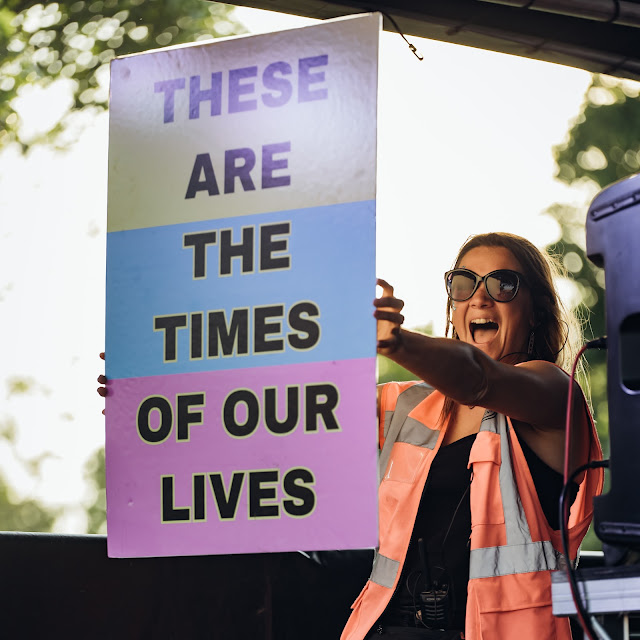
Rachel, one of the Yonder Events organisers, holding up a sign that says 'These are the times of our lives' on stage
Yonder Events bringing the vibes at their famous Yonder at the Castle event

Explore the fascinating history of female entrepreneurs in Pontefract in Ladies who Launch, a new interactive and immersive exhibition.

Get hands on and try some of the trades from past and present.

Step back in time to sample the sights and scents of Victorian Pontefract. Discover the local women leading businesses in sometimes surprising industries.

Celebrate the success stories of today’s inspirational businesswomen - from indulgent skincare and beautiful bouquets to therapeutic yoga and exhilarating events.

Tell us about the amazing women in your lives with our comment wall!

The exhibition features local entrepreneurs Michelle and Karen (Michelle's Flowers Ltd), Rachel and Hayley (Yonder Events), Emma (Santosha Yoga Studio) and Hollie and Lorna (Wild and Wood Skincare).

A fantastic team of Volunteer Researchers conducted research into four local Victorian businesswomen. Many thanks to Alice, Jennifer, Julia and Samuel for helping us to share these stories.


Boxed In (From Whence You Came) by Fern Woodhead 

13 November 2023 - 19 October 2024
Free - no booking required

A black and white oil pastel self-portrait of Fern, trying to squeeze themself back into a box. The box reads 'Defective - return to creator'
'Boxed In (From Whence You Came)' by Fern Woodhead, now on display at Pontefract Museum

Boxed In (From Whence You Came) is a brand-new artwork by Pontefract’s own Fern Woodhead (they / them).

The artwork explores Fern’s feelings about “being a queer person in an inherently non-queer society.” The striking oil pastel self-portrait is a response to Fern’s identity as a non-binary person and lesbian.

The display also features supporting commentary written by Fern along with personal items they have kindly lent for the exhibition. These include the Grayson’s Art Club exhibition catalogue in which they feature, and a hand-made crocheted lesbian pride flag.

Fern hopes that the exhibition will raise awareness and start conversations around sexuality and gender identity. Wakefield Museums & Castles are very proud to acquire and display such an important and inspiring artwork and to showcase exciting local talent like Fern. The acquisition contributes to ongoing work to diversify the collection so that it represents a wide range of people’s lived experiences.

Fern says "With this exhibition, I hope that we can bring more awareness and start more conversations about identity – all of us have an identity, so why shouldn’t we talk about it?"

Fern's full commentary on 'Boxed In (From Whence You Came)' and more information

Visitor and access information for Pontefract Museum

Tuesday, July 25, 2023

Castleford Community Cases - New Displays at Castleford Museum

Castleford Museum’s latest exhibition honours inspiring local women from the worlds of education, art, politics and sport. 

Four new family-friendly and interactive displays showcase historic pioneers and the stars of the future!

Making their Mark display, with different styles of colourful painted pottery

Making their mark reveals how the influential art teacher Alice Gostick sparked a passion for pottery painting across the country. 

Following her example, talented craftswomen led Castleford’s proud tradition of hand decorating ceramics. 

The display focuses on the intricate work of five painters: Eva Arundel, Mrs England, Vera Ward, Ida Woodward, and Alice herself. 

The women’s beautiful pots are a rainbow of colour and pattern, each signed with their own unique maker’s mark.

A large fabric hand stitched and drawn banner. Large text:Fryston Branch, N. U. M, Can, shall and must! Oppose Pit Butchery.
Fryston Flying Pickets banner, on display in Joining ranks. 

Joining ranks pays tribute to the women who rallied together during the 1984-85 miners’ strike. Discover how they protected communities and often changed their lives in the process.

The display features key objects such as the hard-hitting ‘A-Z of a Miner’s Wife’ poster sold in aid of the Normanton and Altofts Miners’ Support group, which is kindly lent by the National Coal Mining Museum

It sits alongside a banner, handmade for two of Fryston’s flying picketers by their sister, and proudly adorned with Women Against Pit Closures stickers. The banner was donated to the Wakefield Museums & Castles collection in 2018 and is displayed here for the first time.  


Black satin fitted blazer with silver collar and pockets
Meg's fabulous black and silver Lee Bender jacket, on display in Degrees of style

Degrees of style tells the story of a miner’s daughter turned stylish socialite, who reinvented her life. Fashion follower Meg returned to education later in life and swapped glamorous parties for university and a career in design. 

Meg’s story is told by a close friend and the display centres on one of her prized fashion staples, a distinctive black and silver jacket by Lee Bender at Bus Stop, worn on the local 1980s dinner party circuit. 

You can also try on a range of vintage jackets for size!  


Castleford Academy girls rugby league team photo
Castleford Academy girls rugby league team

Raising champions features some of the many girls’ rugby league cups and medals in Castleford Academy’s impressive trophy cabinet. Marvel at the school’s honours board, hear from former students who have made it to the sport’s highest level, and see the current stars in action. 

Former students who have made it to the sport’s highest level share their stories in their own words and explain what rugby league means to them, whilst training footage shows the Academy’s current stars in action. 

Young visitors inspired to follow in their footsteps can find out how to get started in the game, and take their celebration selfie with our museum trophy!

Share your story  

We also want to hear your stories! We are especially keen to hear about any women who were involved in the miners’ strike or worked in the pottery industry. Story sheets are available in the Museum for you to fill in with details of the amazing women in your lives.


The hand-painted coffee set by Alice Gostick and the Fryton Flying Pickets banner both also feature in our 100 Years of Collecting Online Exhibition.

Tuesday, April 18, 2023

Richmal Mangnall: Q&A

In this guest blog, artist Guy Schofield talks about Richmal Mangnall: Q&A, a new display exploring Richmal Mangnall's life through digital art and AI. The display was co-created with a group of young people over a series of digital arts workshops. 

Read on to go behind the scenes - and see what ChatGPT has to say about the future of education!

Part of the display Richmal Mangnall: Q&A at Wakefield One. This part focusses on the painting of Mangnall and some of the young participants' work


This exhibition is about the life and work of Richmal Mangnall, a schoolteacher and writer who became headmistress of Crofton Hall School in 1808.

Richmal Mangnall (1769-1820) was originally a pupil at Crofton Hall school and became a teacher there in the 1790s. As well as teaching hundreds of young people, she also wrote the textbook Historical and Miscellaneous Questions for the Use of Young People. At first, the book was just intended for use at the school in Crofton. However, it went on to become an influential textbook used at schools across the country. By 1857, it had reached 84 editions. ‘Mangnall’s Questions’ was referenced by many influential writers and social commentators, including Charles Dickens, Elizabeth Gaskell, and James Joyce. 

The book was made up of a series of questions and answers in which Mangnall covered geography, science, literature and religion. This might seem strange to us now but in the late 18th century, learning by rote (memorising facts and figures) was a common way of educating young people.

In this project, a group of young people from Wakefield and surrounding areas worked with artist Guy Schofield to think, talk and make art about Mangnall’s life and ideas. We thought about how the concept of asking and answering precise questions and answers connects with the modern world, especially in fields such as education, coding, and AI. We also discussed how women’s roles have changed in teaching and learning since Mangnall’s time. Over several sessions we made digital artworks using a range of different techniques.


Guy Schofield helping a young participant at one of the digital arts workshops. There are printouts of information next to them, including an image of Richmal Mangnall
Guy Schofield working with the young participants at one of the Digital Arts Workshops

Session 1: Saturday 7 January 2023

We started the project by talking about Richmal Mangnall’s life and work. Mangnall became a teacher at a time when women were expected to take care of children and the home. Very few women were able to work in professional jobs and teaching was one of the few careers available to them.

We also talked about Mangnall’s Questions and how learning by rote compares to the young people’s experience of school. We thought about fields where precise questions and answers are still very important, such as coding.

After discussing the idea of learning by instruction, we wrote programs to instruct a computer to draw digital self portraits. Each of the lines and shapes in these images is defined by a line of code. Some of the images relate to ideas about education and Mangnall’s life. Others represent objects we felt were significant to us. For example, Evie chose to experiment with abstract shapes, while Owen made an image of his PlayStation 1.  


A series of pink, green and blue abstract shapes on a dark red background
Evie's digital artwork experimenting with abstract shapes.

A series of shapes used to create the image of a PlayStation 1, grey on black background
Owen's digital artwork of his PlayStation 1.

Session 2: Saturday 21 January 2023

Following the work in the previous session, we thought about how questions and answers are important in different types of programming. We rewrote a slitscan program in the programming language Processing, to store images of different sizes. Slitscans are long-exposure images in which a moving line of pixels is recorded over time. The young people captured slitscans of objects from Wakefield Museum including several relating to Richmal Mangnall’s life.


A slitscan image of the Cameron motorcycle, with parts of the bike repeated out of sequence
A slitscan image of the Cameron motorcycle built by Amy Gill's father, on display at Wakefield Museum

We also talked about art in Mangnall’s time and how important people were celebrated through statues and paintings. We used the photogrammetry app Polycam on a mobile phone to make ‘virtual statues’ representing ideas from the workshops. Photogrammetry involves using a computer to make 3D models of objects from hundreds of photographs. Archaeologists and engineers use photogrammetry to make accurate digital measurements of landscapes and objects. We put the statues into a virtual art gallery using 3D software Blender.


A virtual statue of one of the young participants, sat reading a book, on display in a virtual art gallery
A virtual statute of one of the young participants created in Polycam, on display on a virtual art gallery

Session 3: Saturday 28 January 2023

We started the session talking about how Artificial Intelligences such as DALL-E and ChatGPT are in the news at the moment. Artificial Intelligence (AI) is being used more and more in a range of technologies, from social media to medicine. We experimented with two different AIs to make artworks.

We asked OpenAI.com’s DALL-E2 to make images relating to Richmal Mangnall and the themes of the exhibition. The images produced by AIs are based on a limited understanding of the world and often include nightmarish misunderstandings of the shapes of objects. We asked DALL-E2 to make images from the following prompts:


A digitally created image of a dark yellow book with a title 'Whis Ho Monas The Wastass???', with an illustration of a young person looking somewhat confused
DALLE-2's image from the prompt 'The cover of the book 'Historical and Miscellaneous Questions for the Use of Young People''

A digitally-created 'watercolour' with a series of children seated in rows in an historical classroom
DALLE-2's image from the prompt 'Crofton Hall Schoolroom from the 18th century in watercolour with students including one wearing a dunces cap, with no teacher'


We also tried to make DALL-E2 create an image of Richmal Mangnall by describing her in prompts. We found that the AI assumed that Mangnall was male, which showed how AIs can reproduce the biases and prejudices in the information they work with.

A digitally-created 'oil painting' of a white male figure, in a suit, with a moustache trying to escape his face
A DALLE-2 image responding to the prompt 'Richmal Mangnall', and assuming she was male

A digitally-created 'oil painting' created by prompts trying to recreate the oil painting of Mangnall. It shows a female figure in a similar white dress and cap to Mangnall, with orange necklace, reading a book
A DALLE-2 image responding to prompts trying to recreate the oil painting of Richmal Mangnall - this one is much closer!

Working with ChatGPT

ChatGPT is a chatbot: an Artificial Intelligence designed to have conversations with human beings. Taking the idea of simple questions and answers, we asked ChatGPT what it knew about Richmal Mangnall and about education in the past and future. We found that ChatGPT could produce quite convincing statements about education…

“It is difficult to predict exactly how education will change in the next 250 years, as it will likely be influenced by a variety of factors such as technological advancements, societal changes, and shifts in global priorities.”

….but that it struggled with basic information about human beings. When we asked about Richmal Mangnall, it confused her with the author Richmal Crompton and said that she wrote several books after her own death!

The last part of the workshop was spent planning the exhibition. The young people thought about how to use sustainable materials wherever possible and made mock-ups of the display case, using prints of the artwork they had made. 


Highlights

The thing I enjoyed most about the project was how enthusiastic the young people were. They were really courageous in tackling big ideas around education, diversity and AI. 

The young people took a really active part in the design of the exhibition and had some great ideas about how to display the work they had made in a three dimensional space. 


You can watch the unveiling of 'Richmal Mangnall: Q&A' by some of the young participants, with an introduction from Curator John Whitaker, below:


Richmal Mangnall: Q&A is now on display in the Wakefield One atrium until late September 2023. 

The atrium case is just outside of Wakefield Museum, up the stairs in the wider Wakefield One building. Click here for access and visitor information at Wakefield Museum.

Want to learn more? Join us on Thursday 27 April for our Online Talk - Richmal Mangnall: Q&A with Guy Schofield and John Whitaker!